
8 Posture Correction Exercises for Pain Relief & Better Alignment
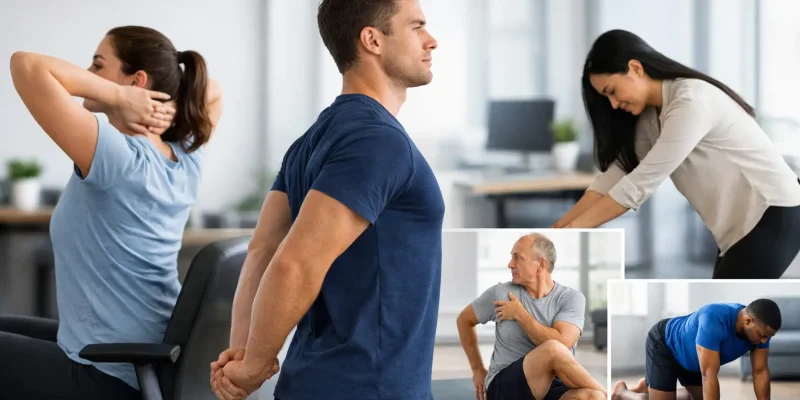
If your shoulders keep creeping toward your ears by 3 p.m., your lower back feels cooked after a workday, or your neck complains every time you look up from your phone, your body is not being dramatic. It is responding to stress, repetition, and positioning. The right posture correction exercises can help, but only when they match the reason your posture changed in the first place.
That is the part many people miss. Posture is not just a willpower problem. You cannot simply sit up straight for ten hours and expect your muscles, joints, and nervous system to salute. If certain muscles are tight, others are weak, and spinal joints are not moving well, your body will keep returning to the same familiar pattern. That is why lasting change usually comes from a combination of movement, mobility, and, when needed, a proper evaluation to find the root cause.
Why posture changes in the first place
For most adults, posture shifts slowly. Desk work, commuting, stress, old injuries, repetitive workouts, and too much time looking down all push the body in the same direction. The head drifts forward, the upper back rounds, the shoulders roll inward, and the pelvis may tip in a way that loads the low back.
Sometimes the issue is muscular. Tight chest muscles and hip flexors can pull you out of alignment, while the upper back, glutes, and deep core are not doing enough to support you. Sometimes the issue is joint motion. If the thoracic spine is stiff, your neck and low back often pick up the slack. And sometimes pain changes posture first, not the other way around. If a movement hurts, your body adapts. Helpful at first, annoying later.
That is why there is no magic exercise. The best posture correction exercises improve how you move, not just how you look in a mirror.
Posture correction exercises that target the usual trouble spots
These exercises are simple, effective, and realistic for busy adults. You do not need an hour, a home gym, or a monk-like commitment to perfect ergonomics. You do need consistency.
Chin tucks for forward head posture
If your head lives a few inches in front of your shoulders, your neck muscles are working overtime. Chin tucks help retrain the deep neck flexors and reduce that constant strain through the base of the skull and upper shoulders.
Stand with your back against a wall or sit tall in a chair. Gently draw your chin straight back as if you are making a small double chin. Do not tip your head up or down. Hold for a few seconds, then relax. This should feel subtle. If you look like a turtle trying to reverse into its shell, you are doing too much.
Start with 8 to 10 reps. Done regularly, this exercise can make a surprising difference for desk workers and phone hunchers.
Doorway pec stretch for rounded shoulders
When the chest is tight, the shoulders tend to roll forward. Stretching the pectoral muscles can create room for a better shoulder position.
Place your forearms on the sides of a doorway and step one foot forward until you feel a stretch across the front of the chest. Keep your ribs down and avoid cranking into your low back. Hold for 20 to 30 seconds and breathe normally.
This stretch is especially useful if you lift weights, drive a lot, or spend long hours typing. The trade-off is that stretching alone will not keep the shoulders back. You also need to strengthen the muscles that support the upper back.
Wall angels for upper back and shoulder control
Wall angels are humbling in the best way. They expose stiffness in the upper back and poor shoulder mechanics fast.
Stand with your back against a wall, knees soft, and lower ribs gently pulled in. Bring your arms up like goalposts and slowly slide them upward, then back down, while keeping as much contact with the wall as you comfortably can. Do not force it.
If this feels impossible, that is information, not failure. Small, controlled reps are better than fake range of motion. Aim for 6 to 10 slow repetitions.
Thoracic extension over a foam roller
A stiff upper back often drives compensation elsewhere. This movement helps restore extension through the thoracic spine, which can reduce pressure on the neck and low back.
Place a foam roller across your upper back while lying on the floor with knees bent. Support your head with your hands and gently extend backward over the roller. Move slowly and avoid arching from the lower back. Pause, breathe, and then shift the roller slightly to target another segment.
This is one of the most useful posture correction exercises for people who sit for long periods. If you have osteoporosis, a recent injury, or sharp spinal pain, this is one to clear with a doctor first.
Band pull-aparts for upper back strength
If your posture falls apart halfway through the day, endurance may be the issue as much as strength. Band pull-aparts train the muscles between the shoulder blades to help support a more upright position.
Hold a resistance band at shoulder height with arms straight in front of you. Pull the band apart by moving your arms outward and squeezing your shoulder blades gently together. Keep the shoulders down and avoid jutting the chin forward.
High reps usually work well here. Try 12 to 15 controlled repetitions. This is a favorite because it is simple, portable, and hard to argue with.
Bird dogs for spinal stability
Good posture is not just about your shoulders. Your core has a major job in controlling spinal position during movement.
Start on hands and knees. Extend one arm forward and the opposite leg back while keeping your trunk steady. Think long, not high. If your low back rotates or sags, reduce the range. Hold briefly, then switch sides.
Bird dogs help connect core control with limb movement, which matters in real life. You are not a statue. You need posture that holds up while reaching, lifting, walking, and living.
Glute bridges for pelvic support
When the glutes are underperforming, the low back and hip flexors often pick up the workload. Glute bridges can help restore balance around the pelvis.
Lie on your back with knees bent and feet flat. Gently brace your abdomen, press through your heels, and lift your hips until your body forms a straight line from shoulders to knees. Pause, then lower with control.
You should feel this mostly in the glutes and hamstrings, not in the low back. If your hamstrings cramp, adjust your foot position and reduce the height.
Hip flexor stretch for sitting-related tension
Tight hip flexors can contribute to an anterior pelvic tilt and low back discomfort, especially if you spend most of the day seated.
Kneel on one knee with the other foot in front. Tuck the pelvis slightly and shift forward until you feel a stretch in the front of the hip on the kneeling side. Keep your torso upright and avoid leaning forward into it. Hold for 20 to 30 seconds.
This stretch works best when paired with glute and core strengthening. Otherwise, your body may just slide back into the same pattern by dinner.
How often should you do posture correction exercises?
Most people do better with a little work done often. Ten to fifteen minutes, four or five days a week, usually beats one heroic session on Sunday followed by a week of ignoring your body like a bad group text.
You do not need every exercise every day. A smart approach is to choose one mobility drill, one stretch, and two strengthening movements. If your main complaint is neck tension, emphasize chin tucks, thoracic mobility, and upper back strengthening. If your low back gets cranky after sitting, prioritize hip flexor mobility, glute bridges, and bird dogs.
Mild muscle fatigue is fine. Sharp pain, numbness, tingling, headaches triggered by movement, or symptoms that travel into the arm or leg are signs to stop and get evaluated.
When exercise is helpful, and when you need more than exercise
Exercises can absolutely improve posture, reduce strain, and support long-term results. But there are times when they are not enough on their own. If spinal joints are restricted, if an old injury changed how you move, or if pain keeps shutting muscles down, you may need more than a YouTube routine and good intentions.
That is where a proper assessment matters. At Greater Life Wellness Center, that process may include a consultation, a comprehensive exam, and imaging when clinically indicated so the care plan is based on what your body is actually doing, not guesswork. For some patients, posture problems improve fastest when corrective exercises are paired with chiropractic care, targeted stretching, and a plan built around the root cause.
That is not overkill. That is efficiency. When the right joints move better and the right muscles are activated, posture correction stops feeling like a constant reminder and starts becoming your new default.
A better posture is not about looking stiff, military-straight, or weirdly proud of your collarbones. It is about moving with less strain, breathing more freely, and getting through your day without your neck, back, and shoulders filing formal complaints.
NEW PATIENT SPECIAL OFFER
If you’d like to increase your quality of life and revitalize your health… naturally, we have a valuable offer for you!
First visit for $59 which includes a consultation, examination, computerized muscle balance scan, and any necessary X-rays, to see if we can help you before you make any financial commitment.
There is NO OBLIGATION!

Dr. Henry Wong, DC
3689 Midway Drive, Suite G, San Diego, CA 92110
(619) 222-8885
Chiropractor San Diego CA
Monday, Wednesday & Thursday :
8:00 AM – 1:00 PM and 3:00 – 6:00 PM
Tuesday :
Appointment Only
Friday :
Appointment Only
Walk-ins Welcome During Regular Business Hours!
© 2026 GREATER LIFE WELLNESS CENTER, All Rights Reserved