
Back Spasms: Point Loma Relief and Next Steps
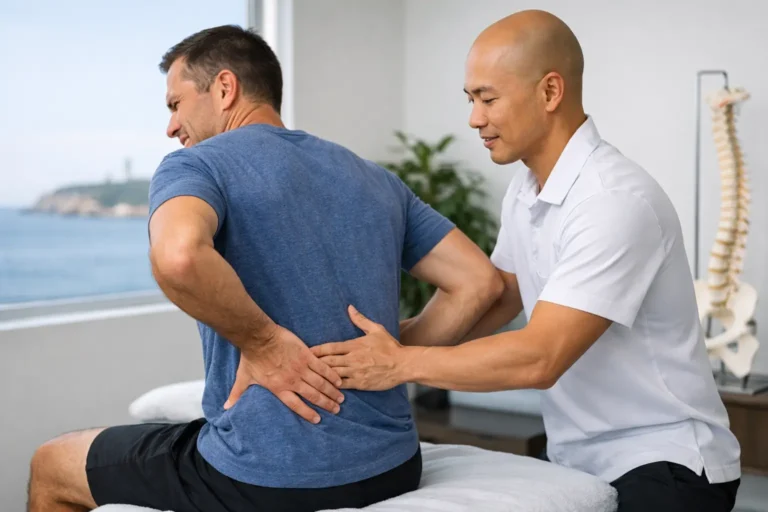
A back spasm does not politely wait for a convenient time. It can hit while you are loading groceries, standing up after a long Zoom call, swinging a golf club, or simply rolling over in bed. One moment you are moving normally; the next, your muscles clamp down and make even a short walk feel like a major event.
For active adults around Point Loma, the Midway District, Ocean Beach, Liberty Station, and Pacific Beach, back spasms can be especially frustrating. You have work to do, workouts planned, kids to pick up, and a life that does not have room for being stuck on the couch. The goal is not just to quiet the spasm for a few hours. It is to understand why your back reached its breaking point and build a plan that helps you move with more confidence.
What Back Spasms Can Be Telling You
A back spasm is a sudden, involuntary tightening of a muscle. It may feel like a knot, a sharp grab, a cramp, or a hard protective band across one side of the lower or upper back. Sometimes the discomfort stays in one spot. Other times it spreads into the buttock, hip, shoulder blade, or neck.
Muscles often spasm because they are trying to protect an area they perceive as irritated, overloaded, or unstable. That does not mean every spasm signals a serious injury. A long day of sitting, an unfamiliar workout, poor sleep, dehydration, stress, or lifting with a twisted posture can all contribute. But recurring spasms are worth investigating rather than simply stretching through and hoping for the best.
The issue is often cumulative. A minor movement may be the final straw, not the true cause. For example, bending to pick up a laundry basket may trigger pain, but the bigger picture could include weeks of desk posture, limited hip mobility, weak core control, old injuries, and a spine that is not moving as well as it should.
Common Triggers That Deserve a Closer Look
Back spasms may follow an obvious event, such as a fall, a hard workout, a car accident, or moving furniture. They also commonly appear without one dramatic moment. In those cases, the body may have been compensating quietly for a long time.
Common contributors include strained muscles, repetitive bending or twisting, prolonged sitting, poor lifting mechanics, sudden increases in training, and stress-related tension. Joint restriction in the spine or pelvis can also change how surrounding muscles work. When one area is not moving efficiently, another area may work overtime. Muscles are helpful teammates, but they can become very grumpy when asked to do everyone else’s job.
Pain that travels from the low back into the buttock or leg may involve irritation affecting the sciatic nerve pathway. This is one reason a careful exam matters. Sciatica treatment in San Diego should not be based on a guess or a one-size-fits-all stretch from the internet.
When a Back Spasm Needs Urgent Medical Attention
Most muscle spasms improve with appropriate care, gentle movement, and time. Still, certain symptoms require prompt medical evaluation. Seek urgent care if back pain follows a significant accident, or if it comes with new bowel or bladder changes, numbness in the groin area, severe or progressing leg weakness, fever, unexplained weight loss, or pain that is constant and unrelenting at rest.
If you have a history of cancer, osteoporosis, immune suppression, or long-term steroid use, tell your provider. These details can change the safest next step. A responsible chiropractor does not adjust first and ask questions later. Your history, symptoms, and examination findings should guide the decision.
Can a Chiropractor Help With Back Spasms?
Chiropractic care may help some people with back spasms, particularly when restricted spinal or pelvic joint motion, muscle imbalance, posture, or movement mechanics are contributing to the problem. The purpose of care is not to force a muscle to relax. It is to evaluate the areas affecting how your body moves, identify what may be driving repeated overload, and support better function.
At Greater Life Wellness Center, care begins with a consultation and comprehensive exam. When clinically indicated, X-rays may be used to better understand spinal alignment, joint changes, and other factors relevant to your care. You then receive a report of findings that explains what was discovered in plain English and outlines recommendations before treatment begins.
Depending on your needs, a plan may include chiropractic adjustments, corrective exercises, targeted stretching, posture and ergonomic guidance, and practical lifestyle support. An adjustment is not a magic button, and no ethical provider should promise that one visit will fix every case. Yet when the source of mechanical stress is identified and addressed, many patients find they can move more comfortably and return to the activities they enjoy with less reliance on pain medication.
This conservative, hands-on approach can be especially valuable after an accident. If you have been hurt in a collision, an auto accident chiropractor in San Diego can assess musculoskeletal concerns that may not feel severe on day one but become more noticeable as stiffness and inflammation build.
What to Do During an Acute Spasm
If a spasm catches you off guard, resist the urge to either push aggressively through it or stay completely still for days. Both extremes can make recovery harder. The right approach depends on the severity of your pain and whether there are warning signs.
For a typical mild-to-moderate spasm without red flags, use comfortable, gentle movement. Short walks around the house can be more helpful than staying in bed. Try changing positions regularly, and avoid deep bending, twisting, heavy lifting, or intense stretching that reproduces sharp pain. A cold or warm compress may feel soothing – choose the one that provides more comfort, since individual responses vary.
Slow breathing can also help reduce the “guarding” response. Place one hand on your rib cage, breathe in gently through your nose, and let your ribs expand. Then exhale longer than you inhaled. It sounds almost too simple, but a nervous system in high alert can keep muscles braced long after the original movement has ended.
Avoid using medication as the only strategy if you can. Medication may have a role for some people under the direction of their medical provider, but it does not correct the lifting pattern, joint restriction, training error, or chronic tension that may have led to the spasm. The goal is to create a recovery plan that addresses more than the volume of pain.
How Many Chiropractic Visits Are Needed?
The honest answer is: it depends. A first-time spasm after an unusual workout may respond differently than chronic low back tightness that has flared repeatedly for years. Your age, activity level, job demands, imaging findings when needed, prior injuries, sleep, stress, and willingness to follow through with home recommendations all matter.
Some patients notice meaningful relief early in care. Others need a more structured period of care because the spasm is part of a broader pattern involving poor mobility, muscle weakness, or longstanding spinal stress. After the initial evaluation, your doctor should explain the recommended frequency, what improvement should look like, and when the plan will be reassessed. You should never feel pressured to commit without understanding the why behind the recommendation.
For San Diego residents in 92106, 92110, 92107, 92109, and nearby neighborhoods, choosing a chiropractor should feel like choosing a partner in your health, not signing up for a mystery subscription. Ask questions. Expect clear answers. Your body deserves more than a quick crack and a wave goodbye.
Keeping Spasms From Running the Show
Once acute pain settles, prevention becomes more productive. This is where corrective exercise and daily habits matter. Building hip and core strength, improving spinal mobility where appropriate, setting up your workstation better, warming up before sports, and learning to hinge and lift correctly can reduce the repeated strain that fuels many flare-ups.
Recovery also depends on the basics: consistent sleep, adequate hydration, nutrition that supports your goals, and stress management. These are not glamorous answers, but bodies are not machines that run well on coffee, chaos, and five hours of sleep. A personalized plan makes the basics more realistic and gives you a way to measure progress.
If back spasms are limiting your work, sleep, exercise, or ability to enjoy life, do not wait for the next flare-up to make the decision for you. Reserve a no-obligation consultation and evaluation to discuss what is happening, get your questions answered, and learn whether a doctor-led chiropractic evaluation is the right next step. Relief matters, but understanding how to keep moving matters even more.
NEW PATIENT SPECIAL OFFER
If you’d like to increase your quality of life and revitalize your health… naturally, we have a valuable offer for you!
First visit for $59 which includes a consultation, examination, computerized muscle balance scan, and any necessary X-rays, to see if we can help you before you make any financial commitment.
There is NO OBLIGATION!

Dr. Henry Wong, DC
3689 Midway Drive, Suite G, San Diego, CA 92110
(619) 222-8885
Chiropractor San Diego CA
Monday, Wednesday & Thursday :
8:00 AM – 1:00 PM and 3:00 – 6:00 PM
Tuesday :
Appointment Only
Friday :
Appointment Only
Walk-ins Welcome During Regular Business Hours!
© 2026 GREATER LIFE WELLNESS CENTER, All Rights Reserved