
Numbness in Fingers Care Near Point Loma
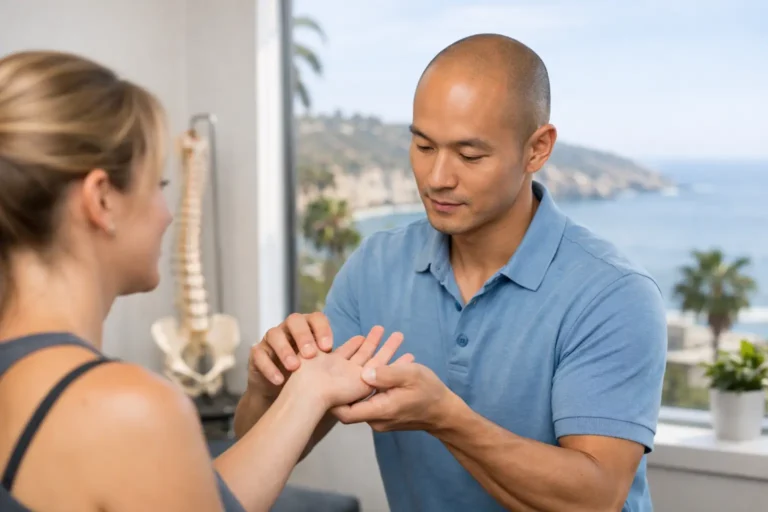
Your hand falls asleep while you are typing, driving across San Diego, or holding a paddleboard. You shake it out, feeling returns, and you move on. But numbness in fingers that keeps returning, wakes you at night, or appears with pain or weakness deserves more than a quick wrist shake and a hopeful shrug.
The nerves that create sensation in your fingers travel a long route. They begin in the neck, pass through the shoulder and arm, and move through narrow spaces at the elbow and wrist before reaching the hand. Irritation anywhere along that pathway can change what you feel. Finding the source is the useful part – and it is why a thoughtful exam matters more than simply chasing the numb spot.
What numbness in fingers can mean
Finger numbness is a symptom, not a diagnosis. Sometimes it is temporary pressure from sleeping on an arm or leaning on an elbow. Other times, it reflects nerve irritation, repetitive strain, circulation concerns, metabolic health issues, or a condition that needs prompt medical attention.
The pattern can offer clues. Numbness or tingling in the thumb, index, middle, and part of the ring finger is often associated with pressure on the median nerve at the wrist, commonly called carpal tunnel syndrome. Symptoms in the ring and pinky fingers may involve the ulnar nerve, which can become irritated around the elbow or wrist.
When numbness spreads from the neck into the shoulder, arm, and hand, the source may be higher up the chain. Muscle tension, joint restriction, posture-related strain, disc changes, or narrowing around a nerve root in the neck can all contribute. That does not mean every tingling hand is a neck problem. It means the wrist should not automatically receive all the blame.
For active adults, the trigger may be obvious: cycling with sustained pressure through the hands, lifting, surfing, overhead training, desk work, or a long stretch of phone scrolling with the neck bent forward. For others, symptoms show up without one memorable event. Both situations call for a careful history and exam.
When finger numbness needs urgent care
Do not wait for a chiropractic appointment if numbness begins suddenly with facial drooping, trouble speaking, confusion, severe headache, fainting, vision changes, or weakness on one side of the body. Call 911. Those may be signs of a stroke or another emergency.
Prompt medical evaluation is also appropriate when numbness follows a significant injury, progresses quickly, occurs in both hands and feet, or comes with major loss of hand strength, balance problems, fever, unexplained weight loss, or changes in bladder or bowel control. A natural, conservative approach works best when the right problem has been identified first.
Can a chiropractor help with numbness in fingers?
A chiropractor may help when numbness in the fingers is related to mechanical nerve irritation, restricted movement, posture, muscle tension, or a neck and upper-back condition affecting the nerve pathway. Chiropractic care is not a one-size-fits-all answer, and it is not a replacement for emergency or specialty medical care when red flags are present.
At Greater Life Wellness Center, the goal is to look beyond the symptom and identify potential stress points in the nervous system. A doctor-led evaluation may include a consultation, posture and movement assessment, orthopedic and neurological testing, and X-rays when clinically indicated. The report of findings should explain what was found, what may be contributing, and whether conservative chiropractic care is appropriate.
If a wrist-specific problem, diabetes-related neuropathy, inflammatory condition, medication effect, or another cause seems more likely, the right next step may involve coordination with your primary care clinician or a specialist. Good care is not about claiming every problem belongs in one office. It is about helping you get the right answer without guessing.
What chiropractic care may include
When the examination supports chiropractic care, treatment may focus on improving joint motion and reducing mechanical stress through specific spinal or extremity adjustments. Your plan may also include soft-tissue work, corrective exercises, targeted stretches, and guidance on workstation setup, sleep positions, training habits, and recovery.
For example, someone with neck-related tingling after long hours at a laptop may need more than an adjustment. They may need to change monitor height, take movement breaks, rebuild upper-back strength, and stop treating a slouched work posture as an eight-hour endurance event. Your neck is not designed to spend its career auditioning to be a question mark.
Someone whose symptoms flare during strength training may need modifications to grip, loading, wrist position, or overhead volume while the nerve settles down. The best plan protects activity without unnecessarily sidelining the person who wants to get back to running, lifting, swimming, or weekend adventures.
How many chiropractic visits are needed?
There is no honest universal number. A mild, recent problem tied to posture or repetitive strain may respond differently than long-standing symptoms with weakness, prior injury, or imaging findings. The duration of symptoms, the location of nerve irritation, daily habits, health history, and how consistently you follow the home recommendations all matter.
A responsible care plan begins with measurable goals: less frequent tingling, improved grip comfort, better neck mobility, uninterrupted sleep, or a return to work and training tasks without symptoms. Progress should be reassessed. If you are not improving as expected, the plan should be adjusted or the referral conversation should happen. More visits without a clear reason is not a strategy.
What you can do before your appointment
Pay attention to timing and triggers. Does the numbness affect the same fingers each time? Does it worsen while sleeping, driving, gripping weights, using a keyboard, or bending your elbow? Does moving your neck change it? These details help narrow the possibilities.
You can also reduce obvious aggravators for a few days. Avoid prolonged pressure on your elbows, keep wrists closer to neutral during computer work, take brief movement breaks, and vary repetitive hand tasks when possible. Gentle activity is often better than complete inactivity, but do not force stretches or exercises that increase tingling, pain, or weakness.
If you have a history of thyroid dysfunction, insulin resistance, diabetes, nutritional deficiency, autoimmune disease, or heavy alcohol use, mention it. Nerves are influenced by more than alignment alone. Nutrition, inflammation, sleep, stress, blood sugar regulation, and overall health can shape both symptoms and recovery.
A thorough evaluation matters in Point Loma
For people in Point Loma, the Midway District, Ocean Beach, Liberty Station, and nearby ZIP codes such as 92106, 92110, 92107, and 92109, it is easy to write off hand tingling as the cost of computer work, workouts, and an active San Diego lifestyle. It does not have to become your normal.
A no-obligation consultation and evaluation can help you understand whether chiropractic makes sense for your situation and what a complete exam would involve. You should leave with clarity, not pressure: what may be driving the symptom, what conservative options may help, and when another type of care is the smarter choice.
Your hands do a remarkable amount of work every day. If they are sending you a recurring signal, listen early. The goal is not merely to make the tingling disappear for an afternoon, but to understand why it is happening and build a path back to comfortable movement with confidence.
NEW PATIENT SPECIAL OFFER
If you’d like to increase your quality of life and revitalize your health… naturally, we have a valuable offer for you!
First visit for $59 which includes a consultation, examination, computerized muscle balance scan, and any necessary X-rays, to see if we can help you before you make any financial commitment.
There is NO OBLIGATION!

Dr. Henry Wong, DC
3689 Midway Drive, Suite G, San Diego, CA 92110
(619) 222-8885
Chiropractor San Diego CA
Monday, Wednesday & Thursday :
8:00 AM – 1:00 PM and 3:00 – 6:00 PM
Tuesday :
Appointment Only
Friday :
Appointment Only
Walk-ins Welcome During Regular Business Hours!
© 2026 GREATER LIFE WELLNESS CENTER, All Rights Reserved