
TMJ Jaw Pain Relief for Point Loma Patients
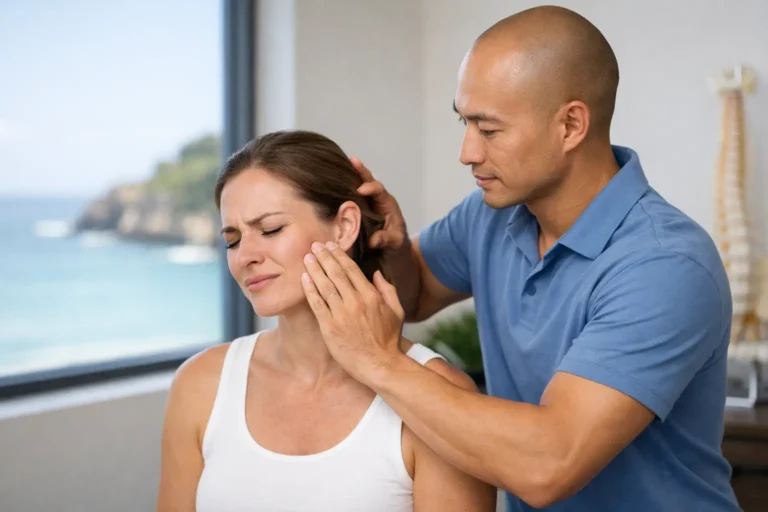
A jaw that clicks once in a while may be annoying. A jaw that hurts every time you chew, yawn, speak in a meeting, or wake up after a tense night can shrink your whole day. TMJ jaw pain often feels like a problem confined to one small joint, but the forces affecting it can involve your bite, jaw muscles, neck, shoulders, posture, stress level, and sleep habits.
For active adults and busy professionals around Point Loma, Liberty Station, Ocean Beach, and the Midway District, the goal is not to simply mute pain long enough to get through lunch. It is to understand what is overloading the system, protect the joint, and help your body move more comfortably again.
What TMJ Jaw Pain Can Feel Like
The temporomandibular joints, or TMJs, connect the lower jaw to the skull just in front of each ear. They are remarkably busy joints. They help you talk, bite, chew, swallow, yawn, and make the questionable decision to eat a giant sandwich on one side of your mouth.
TMJ disorders are a broad group of conditions involving the joint itself, the disc inside the joint, or the muscles that control jaw movement. Symptoms do not look identical from person to person. You may notice soreness at the jaw hinge, pain in the cheek or temple, clicking or popping, limited opening, a jaw that catches, or fatigue while chewing.
Some people also experience ear fullness, ringing, headaches, facial tension, or pain that travels into the neck and upper shoulders. Those symptoms can overlap with dental problems, sinus concerns, migraine, nerve irritation, and ear conditions. That overlap is exactly why a thoughtful assessment beats guessing.
Why Jaw Problems Often Involve the Neck
Your jaw does not operate independently from the rest of your body. The muscles and nerves of the jaw, head, and neck communicate constantly. When the head is carried forward over the shoulders for hours at a laptop, while driving, or while scrolling, the upper neck and jaw muscles may work harder to stabilize the head.
Stress can add another layer. Many people clench their teeth during focused work, intense workouts, traffic, or sleep without realizing it. Nighttime grinding can place substantial repetitive pressure on the jaw muscles and joints. A poorly fitting dental appliance, missing teeth, recent dental work, an injury, or a bite change may also matter.
This does not mean every case of TMJ jaw pain is caused by spinal alignment, and it does not mean that every clicking jaw needs an adjustment. It means the jaw should be assessed in the context of the whole musculoskeletal system. A root-cause approach looks for patterns rather than treating the most obvious sore spot as the entire story.
Common Clues Your Jaw Is Being Overloaded
Pain that is worse after chewing gum, eating chewy foods, or opening wide can suggest joint or muscle irritation. Morning jaw fatigue, tooth sensitivity, or worn teeth may point toward nighttime clenching or grinding. Symptoms that rise with computer work, driving, or stress may indicate that posture and muscle tension are contributing.
A recent whiplash injury is another important clue. After an auto accident, the head and neck can be jolted in a way that changes muscle guarding and jaw mechanics. An Auto Accident Chiropractor in San Diego can evaluate the cervical spine and related soft-tissue tension, while coordinating with other providers when jaw-specific or dental care is needed.
Can a Chiropractor Help With TMJ Jaw Pain?
Chiropractic care may help some people with TMJ-related discomfort, especially when neck pain, restricted upper-back movement, poor posture, muscle tension, or headaches are part of the picture. The purpose is not to promise a cure for every jaw condition. It is to identify and address musculoskeletal contributors that may be keeping the jaw and surrounding muscles under stress.
At Greater Life Wellness Center, care begins with a conversation and comprehensive exam. Your doctor may evaluate how your jaw opens and closes, palpate tense muscles, check neck and shoulder movement, assess posture, and discuss your injury, dental, exercise, and sleep history. X-rays may be recommended when clinically indicated, not as a routine shortcut. If imaging is taken, the report of findings explains what was seen and how it affects the care plan.
Care may include gentle chiropractic adjustments to areas of restricted spinal movement, along with targeted stretching, corrective exercises, posture guidance, and practical strategies for reducing clenching. Some patients also benefit from co-management with a dentist, orthodontist, oral and maxillofacial specialist, physical therapist, primary care clinician, or sleep specialist. That is not a detour. It is good care.
For example, a person with significant tooth grinding may need a dentist to assess whether a night guard is appropriate. Someone whose jaw locks repeatedly may need prompt evaluation by an oral health specialist. Chiropractic can be a valuable part of a conservative, whole-body plan, but it should not replace necessary dental or medical evaluation.
What to Expect During Chiropractic Care
Your first visit should feel more like an investigation than a quick crack-and-go appointment. You will discuss when symptoms started, what makes them better or worse, your work setup, stress patterns, previous injuries, medications, and health history. The exam helps determine whether chiropractic care is appropriate and whether there are reasons to refer you elsewhere first.
If you are accepted for care, your doctor will review a personalized plan. That plan may focus on improving neck mobility, reducing protective muscle tension, building better shoulder and upper-back support, and changing habits that repeatedly irritate the jaw. You should understand the recommendations, expected goals, and what progress will be measured before starting.
Adjustments should be matched to your comfort and clinical needs. Many patients are surprised that their jaw-focused plan includes the neck, upper back, and shoulders. That is because those regions often influence how the head is carried and how the jaw muscles compensate throughout the day.
Between visits, small changes can make a meaningful difference. Rest the tongue gently on the roof of the mouth with the teeth apart when you are not eating. Limit gum, ice chewing, and very chewy foods during a flare. Use a headset instead of cradling a phone between your ear and shoulder. Take brief posture breaks during computer work. If stress drives your clenching, breathing exercises and regular movement are not fluff – they can reduce the muscle tension your jaw is absorbing.
How Many Chiropractic Visits for TMJ Pain?
There is no honest one-size-fits-all number. A mild, recent flare tied to neck tension may respond in a few visits combined with home changes. Long-standing jaw pain, frequent headaches, grinding, a prior accident, or significant posture changes may require a longer plan and coordination with dental care.
Your response to care matters more than a predetermined package. Early visits often focus on reducing irritation and restoring motion. As symptoms improve, care may shift toward corrective exercise, better work and training habits, and a maintenance strategy that supports long-term function. The aim is to help you rely less on temporary fixes, not to make you dependent on endless appointments.
Patients from 92106, 92107, 92110, 92101, and nearby San Diego neighborhoods often arrive after trying to push through the pain with anti-inflammatory medication or avoiding foods they enjoy. Medication can have a role, particularly for short-term symptom management under the direction of a qualified clinician. But if jaw tension keeps returning, it is reasonable to ask what is feeding the cycle.
When Jaw Pain Needs Prompt Medical or Dental Attention
Do not assume all facial or jaw pain is a TMJ issue. Seek urgent medical care for jaw pain accompanied by chest pressure, shortness of breath, sweating, nausea, fainting, or pain spreading to the arm, back, or neck. Those symptoms can signal a medical emergency.
Prompt evaluation is also wise if you have fever, facial swelling, severe tooth pain, trouble swallowing, a sudden inability to open or close the jaw, a major facial injury, unexplained numbness or weakness, or pain that is rapidly worsening. An infected tooth, ear condition, fracture, or other concern needs the right provider quickly.
You deserve more than a life organized around soft foods, pain relievers, and avoiding a full yawn. A careful evaluation can clarify whether your TMJ jaw pain is primarily joint-related, muscle-driven, connected to the neck, or part of a bigger health picture. Reserve a no-obligation consultation and evaluation to discuss what you are feeling and whether a personalized, chiropractic care plan may be a good next step.
NEW PATIENT SPECIAL OFFER
If you’d like to increase your quality of life and revitalize your health… naturally, we have a valuable offer for you!
First visit for $59 which includes a consultation, examination, computerized muscle balance scan, and any necessary X-rays, to see if we can help you before you make any financial commitment.
There is NO OBLIGATION!

Dr. Henry Wong, DC
3689 Midway Drive, Suite G, San Diego, CA 92110
(619) 222-8885
Chiropractor San Diego CA
Monday, Wednesday & Thursday :
8:00 AM – 1:00 PM and 3:00 – 6:00 PM
Tuesday :
Appointment Only
Friday :
Appointment Only
Walk-ins Welcome During Regular Business Hours!
© 2026 GREATER LIFE WELLNESS CENTER, All Rights Reserved