
Carpal Tunnel and Wrist Pain in Point Loma
That tingling in your thumb, index finger, and middle finger is not just an annoying side effect of a long workday. When carpal tunnel and wrist pain begin interrupting sleep, weakening your grip, or making a coffee mug feel strangely heavy, your body is asking for attention.
For many active adults and professionals in Point Loma, the Midway District, Ocean Beach, and nearby San Diego communities, wrist discomfort is easy to ignore at first. You stretch it, shake it out, buy a brace, and hope it behaves. But when symptoms keep returning, the better question is not, “How do I push through?” It is, “What is putting pressure on this area in the first place?”
What Carpal Tunnel and Wrist Pain Can Feel Like
Carpal tunnel syndrome occurs when the median nerve becomes compressed as it travels through a narrow passageway in the wrist called the carpal tunnel. The median nerve helps provide sensation to much of the thumb side of the hand and helps control several thumb muscles. When that nerve is irritated, the symptoms can be surprisingly disruptive.
Common signs include numbness, pins-and-needles sensations, burning, aching, reduced grip strength, or a tendency to drop objects. Symptoms often affect the thumb, index finger, middle finger, and part of the ring finger. They may become worse at night, while driving, while holding a phone, or during repetitive work with a keyboard, mouse, tools, or sports equipment.
Not every sore wrist is carpal tunnel syndrome. Tendon irritation, arthritis, a previous injury, ganglion cysts, nerve irritation from the neck, and strain in the forearm can create similar symptoms. That distinction matters. Treating every wrist problem like carpal tunnel is a little like replacing a light bulb because the room is dark without checking the breaker first.
Why Wrist Symptoms Are Not Always Just a Wrist Problem
The wrist is the final stop in a chain that includes the fingers, hand, forearm, elbow, shoulder, neck, and upper back. Repetitive gripping, poor desk positioning, long hours on a laptop, cycling, tennis, weight training, and manual work can all overload that chain. So can a past fall, an auto accident, pregnancy-related fluid retention, inflammatory conditions, diabetes, thyroid dysfunction, and weight changes.
Posture alone does not cause every case of carpal tunnel syndrome, but it can influence how the neck, shoulders, arms, and hands are loaded throughout the day. A forward-head position, rounded shoulders, tight chest muscles, and limited upper-back movement may contribute to nerve irritation or muscle tension higher up the arm. This is why a wrist-only approach does not always deliver lasting results.
A thoughtful evaluation looks beyond where it hurts. It considers your daily movements, work setup, training routine, sleep position, prior injuries, hand strength, sensation changes, and the way your neck, shoulder, elbow, and wrist move together. Root-cause care does not mean pretending every symptom comes from the spine. It means doing the work to identify the factors that are actually relevant to you.
When You Should Not Wait
Some symptoms deserve prompt medical attention. Seek timely evaluation if you have sudden or progressive hand weakness, constant numbness, major swelling after an injury, severe pain, color changes in the hand, fever, or an inability to move your fingers normally. If you have chest pain, shortness of breath, facial drooping, trouble speaking, or sudden weakness on one side of the body, call 911.
Longstanding nerve compression can lead to muscle loss at the base of the thumb. The earlier persistent symptoms are evaluated, the more options you may have to protect function.
Can a Chiropractor Help With Carpal Tunnel Symptoms?
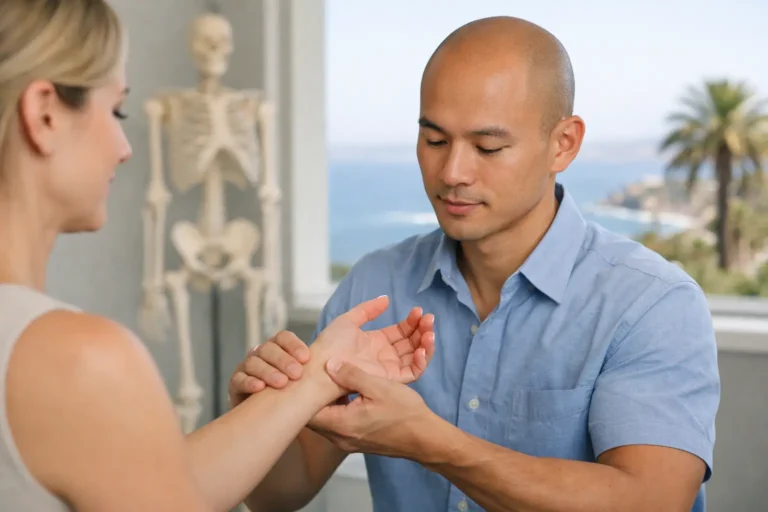
A chiropractor can help some people with wrist pain and carpal tunnel-like symptoms by providing a conservative evaluation and addressing contributing movement problems in the wrist, forearm, elbow, shoulder, and neck. Care may include gentle joint and soft-tissue work, chiropractic adjustments when clinically appropriate, corrective exercises, stretching, ergonomic coaching, and guidance on modifying aggravating activities.
The goal is not to promise that one adjustment will magically erase numbness by Tuesday. Nerve-related symptoms can be complex, and results depend on the cause, severity, duration, work demands, health history, and whether there is significant compression. A quality care plan should be individualized, measurable, and adjusted as your function changes.
At Greater Life Wellness Center, the process begins with a no-obligation consultation, followed by a comprehensive examination when care is appropriate. This may include orthopedic and neurological testing, range-of-motion assessment, and X-rays when indicated. A detailed report of findings helps connect the dots between what you are feeling, what the exam shows, and the recommended next steps.
If findings suggest that you need a medical specialist, nerve testing, imaging, medication, injection, or surgical consultation, a responsible chiropractor should tell you. Conservative chiropractic care can be part of a smart plan, but it should never delay necessary medical care.
What Conservative Care May Include
For many people, reducing pressure on the irritated nerve requires more than resting for a weekend. It may mean changing the positions and repetitions that keep flaring the issue while improving how the entire arm functions.
A wrist brace worn at night can help keep the wrist in a neutral position for some people, especially when nighttime numbness is a major complaint. It is a tool, not a permanent lifestyle accessory. If the brace helps only briefly or symptoms return every time you stop wearing it, that is useful information to bring to your evaluation.
Targeted mobility and strengthening may also help. The right program depends on your findings. Someone with tight forearms from climbing or lifting may need a different approach than someone whose symptoms increase after eight hours of mouse use. Overstretching an irritated nerve or repeatedly forcing painful exercises can make matters worse, so “no pain, no gain” is not the motto here.
Ergonomic changes can be practical and powerful. Keep wrists as neutral as possible while typing, avoid resting the heel of the hand on hard desk edges, bring frequently used tools closer, and take short movement breaks before symptoms become intense. For cyclists and gym-goers, handlebar setup, grip pressure, lifting form, and training volume may need a closer look.
Sleep deserves attention, too. Many people curl their wrists under a pillow or tuck their hands tightly beneath their body. A neutral wrist position and better shoulder support can reduce overnight irritation. Your sleeping posture does not need to be perfect. It just needs to stop picking a fight with your nerves for eight hours.
How Many Chiropractic Visits Are Needed for Wrist Pain?
There is no honest one-size-fits-all number. A newer, mild wrist problem related to repetitive strain may respond over a short course of care combined with activity changes and home exercises. Persistent numbness, prior injury, significant weakness, or symptoms tied to multiple areas of the arm may require a longer plan, co-management, or referral.
Your progress should be evaluated by more than whether you felt looser for an afternoon. Useful markers include fewer nighttime wake-ups, improved grip, longer tolerance for computer work or training, less tingling, better mobility, and reduced need for pain medication. If you are not progressing as expected, the plan should be reassessed rather than simply repeated.
For patients near Liberty Station, Old Town, Mission Hills, Pacific Beach, and ZIP codes such as 92106, 92110, 92107, and 92109, an in-person assessment can clarify whether your symptoms are likely coming from the wrist itself, a problem farther up the arm, or a combination of both.
You do not have to accept numb hands, weaker grip, and interrupted sleep as the price of working hard or staying active. Start with a clear evaluation, ask questions, and choose a plan that protects your ability to work, train, and enjoy the life your hands help you live.
NEW PATIENT SPECIAL OFFER
If you’d like to increase your quality of life and revitalize your health… naturally, we have a valuable offer for you!
First visit for $59 which includes a consultation, examination, computerized muscle balance scan, and any necessary X-rays, to see if we can help you before you make any financial commitment.
There is NO OBLIGATION!

Dr. Henry Wong, DC
3689 Midway Drive, Suite G, San Diego, CA 92110
(619) 222-8885
Chiropractor San Diego CA
Monday, Wednesday & Thursday :
8:00 AM – 1:00 PM and 3:00 – 6:00 PM
Tuesday :
Appointment Only
Friday :
Appointment Only
Walk-ins Welcome During Regular Business Hours!
© 2026 GREATER LIFE WELLNESS CENTER, All Rights Reserved