
Failed Spinal Surgery Help in Point Loma
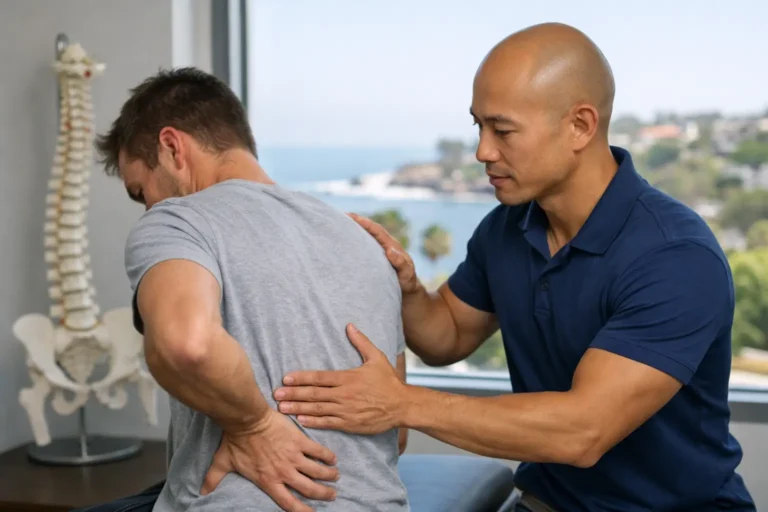
When pain remains after an operation that was supposed to help, it can feel deeply discouraging. Failed spinal surgery is a phrase many people use when they still have back pain, leg pain, numbness, stiffness, or limited mobility after a spinal procedure. It does not necessarily mean the surgeon did something wrong. It means the outcome has not delivered the relief or function you needed.
For people in Point Loma, the Midway District, Ocean Beach, and nearby San Diego communities, the next step should not be guesswork or another rushed prescription. A careful evaluation can help identify what is still stressing your spine and nervous system, what activities may be keeping symptoms alive, and whether conservative chiropractic care is appropriate for you.
What Does Failed Spinal Surgery Mean?
The medical community increasingly uses the term persistent spinal pain syndrome rather than “failed back surgery syndrome.” The newer language matters because it puts the focus where it belongs: on your ongoing symptoms and quality of life, not on blaming you or automatically labeling the procedure a failure.
Spinal surgery may successfully remove pressure from a nerve, stabilize a segment, repair a disc problem, or address a structural concern. Yet pain can persist for several reasons. The original nerve irritation may have been severe and slow to settle. Scar tissue can affect how tissues move around a nerve. Adjacent spinal joints may take on extra stress after a fusion. A new disc issue, muscle deconditioning, altered movement habits, inflammation, or another pain source can also be part of the picture.
That is why persistent pain after surgery deserves more than a quick answer. Your body is not a single sore spot. Your spine, muscles, joints, movement patterns, and nervous system all influence how you feel and function.
Why Pain Can Continue After Spinal Surgery
Sometimes the surgery addressed one pain generator, but not every factor contributing to discomfort. For example, a person may have had a successful lumbar procedure but continue to guard their movement, lose core strength during recovery, and develop stress in the hips or neighboring spinal segments. Another person may still have nerve sensitivity that creates burning, tingling, or sciatica-like symptoms even when imaging shows the surgical site is stable.
This is also why more procedures are not always the automatic answer. A second surgery can be necessary in specific situations, especially if there is instability, a serious new compression, hardware failure, infection, or progressive neurologic loss. But surgery carries trade-offs. When there is no urgent surgical indication, many people want to explore a thoughtful, non-pharmaceutical plan to improve mobility, reduce mechanical stress, and build confidence in movement.
Can a Chiropractor Help After Failed Spinal Surgery?
A chiropractor may be able to help some people after spinal surgery, but only after a thorough evaluation and with the right clinical boundaries. Chiropractic care is not a substitute for emergency care, surgical follow-up, or treatment for a complication that requires a surgeon. It can, however, be part of a conservative plan for people whose surgical area is stable and who need support with movement, joint function, muscle tension, posture, and overall spinal mechanics.
At Greater Life Wellness Center, the starting point is not “lie down and get adjusted.” It is a conversation about your history, surgical procedure, current symptoms, medications, goals, and any records or imaging you have available. A comprehensive exam helps determine whether chiropractic care is appropriate, whether X-rays are indicated, and whether you should be referred back to your surgeon or another specialist first.
If care is appropriate, it may involve gentle, individualized adjustments away from a fused or surgically altered area, along with corrective exercises, targeted stretching, lifestyle guidance, and strategies to calm stress-related muscle tension. The exact approach depends on your procedure, healing timeline, hardware, symptom pattern, bone health, and neurological findings. No two post-surgical spines deserve the same cookie-cutter plan. Your back has already been through enough assembly-line thinking.
What Chiropractic Care Cannot Do
Honest care includes clear limits. Chiropractic adjustments cannot reverse a fusion, remove scar tissue, repair broken hardware, or guarantee that chronic nerve pain will disappear. They should not be used to push through worsening weakness, unexplained severe pain, or symptoms that signal a surgical complication.
The goal is to identify areas where conservative care may safely improve function and reduce stress on the body. For some patients, that means less stiffness and easier walking. For others, it means getting back to light exercise, sleeping more comfortably, or relying less on pain medication as part of a physician-guided plan. Results vary, and progress is usually measured by both symptom changes and what you can do in daily life.
What to Expect at a Post-Surgery Chiropractic Evaluation
A good evaluation should feel unhurried and specific. You should expect questions about the type and date of surgery, where your symptoms travel, what makes them better or worse, prior treatments, and whether you have experienced changes in balance, bowel or bladder control, or strength.
Your doctor may assess posture, range of motion, reflexes, sensation, muscle strength, gait, and how your spine and hips are moving together. If imaging is clinically appropriate, it can provide useful information about alignment and structural changes. Your surgical records, MRI reports, CT scans, and X-rays can also help create a safer plan.
After the exam, you should receive a clear report of findings. This is where you learn what may be contributing to your symptoms, what care may involve, what results are realistic, and when another provider needs to be involved. You deserve explanations in plain English, not a mysterious nod followed by a bill.
How Many Chiropractic Visits Will You Need?
There is no responsible one-size-fits-all number after spinal surgery. Someone with mild stiffness and stable symptoms may begin with a short trial of care and reassessment. Someone with years of altered movement, recurring sciatica, and significant deconditioning may need a longer plan that combines office visits with consistent home exercises and lifestyle changes.
The useful question is not just, “How many visits?” It is, “What are we measuring?” A patient-centered plan tracks meaningful outcomes such as standing tolerance, sleep, walking distance, ability to work, range of motion, medication reliance, and return to activities you enjoy. If you are not progressing as expected, the plan should be reassessed rather than simply extended without explanation.
When to Contact Your Surgeon or Seek Urgent Care
Do not wait for a chiropractic appointment if you develop new or worsening leg weakness, loss of bowel or bladder control, numbness in the groin or saddle area, fever with severe back pain, unexplained drainage near a surgical incision, or rapidly escalating pain after a fall or accident. These symptoms may require urgent medical evaluation.
Likewise, if you have recently had surgery, obtain guidance from your surgeon about recovery restrictions and when conservative manual care may be considered. Healing timelines differ substantially depending on the procedure and your individual health.
A More Complete Path Forward
Persistent pain after surgery can make you feel as though your options are limited to living carefully, taking more medication, or considering another procedure. Often, there is room for a more complete conversation. A conservative care plan can look at how your body is moving now, not only what happened in the operating room months or years ago.
If you are in Point Loma, Liberty Station, Old Town, Pacific Beach, or ZIP codes such as 92106, 92110, 92107, or 92109, a no-obligation consultation and evaluation can be a practical first step. Bring your questions, your history, and your goal – whether that is walking the beach, returning to the gym, keeping up with your family, or simply getting through the day with less fear of your next flare-up. You deserve care that listens closely, investigates carefully, and helps you move toward a life with more freedom.
NEW PATIENT SPECIAL OFFER
If you’d like to increase your quality of life and revitalize your health… naturally, we have a valuable offer for you!
First visit for $59 which includes a consultation, examination, computerized muscle balance scan, and any necessary X-rays, to see if we can help you before you make any financial commitment.
There is NO OBLIGATION!

Dr. Henry Wong, DC
3689 Midway Drive, Suite G, San Diego, CA 92110
(619) 222-8885
Chiropractor San Diego CA
Monday, Wednesday & Thursday :
8:00 AM – 1:00 PM and 3:00 – 6:00 PM
Tuesday :
Appointment Only
Friday :
Appointment Only
Walk-ins Welcome During Regular Business Hours!
© 2026 GREATER LIFE WELLNESS CENTER, All Rights Reserved