
Osteoporosis, Arthritis, or Herniated Disc in San Diego?
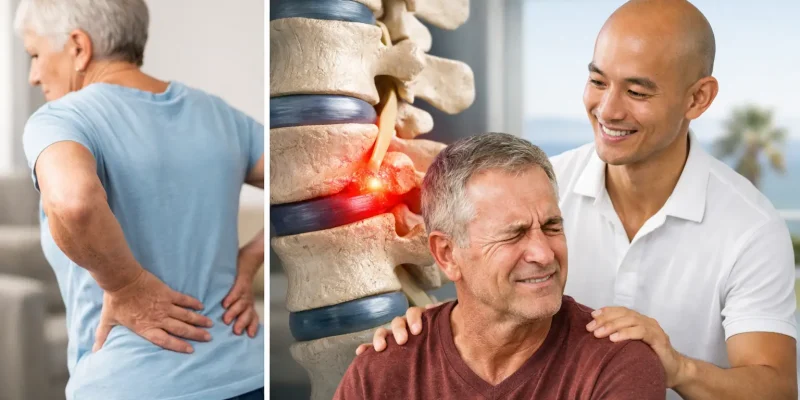
A sore back after a long workday is one thing. Being told you have osteoporosis, arthritis, or a herniated disc can make every bend, workout, and adjustment feel like a question mark. If you are asking, “what if I have osteoporosis, arthritis, or a herniated disc?” the right answer is not to avoid all movement or accept a lifetime of pain. It is to get a careful diagnosis, understand what your body can safely handle, and choose care that respects the condition in front of you.
For people in Point Loma, the Midway District, Ocean Beach, Liberty Station, and throughout San Diego, the goal is simple: move with more confidence, reduce unnecessary irritation, and protect your long-term function. Conservative care can play a meaningful role, but the approach must be personalized. One-size-fits-all treatment is not a plan. It is a gamble.
Osteoporosis, Arthritis, or a Herniated Disc: Start With the Right Exam
These conditions can all cause pain, stiffness, weakness, or changes in mobility, but they are not interchangeable. Treating them as if they are can delay the care you actually need.
Osteoporosis means bones have become less dense and more vulnerable to fracture. Arthritis is a broad term that can involve joint wear, inflammation, or autoimmune disease. A herniated disc occurs when disc material pushes beyond its normal boundary and may irritate nearby nerves. That irritation can create radiating pain, numbness, tingling, or weakness into an arm or leg.
The first question is not, “Can I get adjusted today?” The first question is, “What exactly is happening, and what is safe for me?” A responsible chiropractic office begins with a consultation, health history, and comprehensive examination. X-rays may be appropriate when clinically indicated, particularly when there is a concern about spinal degeneration, alignment, previous injury, or bone health. In some cases, MRI imaging, a bone-density test, lab work, or coordination with your primary care physician or specialist may be needed.
That information should lead to a clear report of findings. You deserve more than being told you are “out of alignment” and sent on your way. You should understand what was found, which structures may be involved, what treatment is recommended, what should be avoided, and what improvement may realistically look like.
If You Have Osteoporosis, Force Is Not the Goal
Osteoporosis does not automatically rule out chiropractic care. It does mean the type of care matters greatly. High-force techniques may be inappropriate for someone with significant bone loss, a history of fragility fractures, or certain spinal changes. The priority is safety, not seeing how loud an adjustment can pop. Your spine is not bubble wrap.
A doctor who understands osteoporosis may use lower-force methods, gentle mobilization when appropriate, soft-tissue work, posture support, and carefully selected exercises. The care plan may also address balance, walking tolerance, core and hip strength, and fall-prevention habits. Building strength and confidence is valuable because fear of movement often causes people to become less active, which can further weaken muscles and reduce stability.
Nutrition, adequate protein, vitamin and mineral status, and medical management of osteoporosis may also be part of the larger conversation. Chiropractic care is not a replacement for medical treatment of bone disease. It can, however, be part of a coordinated plan to help you move better, reduce mechanical stress, and stay engaged in the activities that make life feel like yours.
Seek prompt medical evaluation after a fall, sudden severe back pain, unexplained loss of height, or pain that seems dramatically different from your normal symptoms. With osteoporosis, those changes deserve attention rather than a “let’s wait and see” approach.
Arthritis Care Should Protect Motion, Not Just Chase Pain
Arthritis is often described as normal wear and tear, but that phrase can feel dismissive when getting out of a car, climbing stairs, or turning your head has become a production. The good news is that joint pain does not always mean you must stop moving. Usually, the better question is how to move without repeatedly aggravating the joint.
For osteoarthritis, which commonly affects the spine, hips, knees, hands, and shoulders, conservative care may focus on improving joint mechanics, reducing surrounding muscle tension, supporting mobility, and building strength in the tissues that help stabilize the area. Gentle chiropractic adjustments or mobilization can be appropriate for some patients, while others may respond better to soft-tissue care, corrective exercise, stretching, weight-management support, and activity modifications.
Inflammatory arthritis, such as rheumatoid arthritis, requires additional caution and coordination with the patient’s rheumatologist. During an active flare, a painful or unstable joint may not be a place for forceful treatment. A good care plan changes with your symptoms, medications, imaging, and medical guidance.
Many people with arthritis also fall into the trap of doing too much on their good days and too little on their bad ones. Pacing helps. A short, consistent walking program, mobility work, and strength training tailored to your capacity often beats the weekend warrior routine that leaves you sidelined until Wednesday.
Can a Chiropractor Help a Herniated Disc?
A chiropractor can help some people with herniated-disc-related pain, especially when the care is guided by a thorough exam and the patient is an appropriate candidate for conservative management. The goal is not to force a disc back into place. Discs do not work like a jelly-filled tire that needs a quick shove. The goal is to reduce irritation, improve movement, support spinal mechanics, and help you return to daily activity with less pain and better control.
A herniated disc can be especially frustrating because symptoms may travel. A problem in the low back can cause sciatica, including pain, tingling, numbness, or weakness down the leg. In the neck, disc irritation can send symptoms into the shoulder, arm, or hand. That is why a detailed neurological and orthopedic exam matters. It helps identify whether a nerve may be involved and how urgent the situation may be.
Treatment may include carefully selected chiropractic techniques, decompression-style approaches when appropriate, movement guidance, corrective exercises, hip and core stability work, and advice for sitting, lifting, sleeping, and returning to sports. For active adults looking for sciatica treatment in San Diego, a plan should be built around their actual life: training, work posture, driving, family responsibilities, and the activities they want to get back to.
However, certain signs call for immediate medical evaluation, not a wait-and-see adjustment. These include new or worsening muscle weakness, loss of bowel or bladder control, numbness in the groin or saddle area, fever with severe back pain, unexplained weight loss, or pain following significant trauma. Those symptoms can signal a more serious condition requiring urgent care.
What Should You Expect From Chiropractic Care?
At Greater Life Wellness Center, care begins by listening to the full story, not just locating the loudest pain. A new-patient consultation is a chance to discuss your diagnosis, medications, prior imaging, injuries, lifestyle, and goals. The examination may include posture, range of motion, muscle testing, neurological checks, and X-rays when indicated.
After the exam, you should receive a report of findings that translates clinical information into plain English. If chiropractic care is appropriate, your plan may include adjustments tailored to your condition, targeted stretching, corrective exercises, stress-relief strategies, and nutrition or lifestyle support. If another provider, imaging study, or medical evaluation is needed first, that should be said plainly. Good care is not about keeping every problem in one office. It is about getting you the right care at the right time.
How Many Chiropractic Visits Will I Need?
There is no honest universal number. A recent disc flare-up, long-standing arthritis, and osteoporosis-related mobility concerns each have different timelines. Your response also depends on symptom severity, activity level, sleep, stress, overall health, and whether you can consistently follow the recommended home plan.
Some patients notice meaningful relief early. Others need a slower approach, particularly when symptoms have been present for months or years. The key is reassessment. Your provider should measure progress in real-life terms: Can you sleep more comfortably? Walk farther? Turn your head while driving? Get through a shift without reaching for pain medication? Return to the gym with confidence? If the plan is not producing measurable improvement, it should be adjusted.
Pain medication may sometimes be medically necessary, and stopping prescribed medication without speaking with your prescribing clinician is never the move. Still, many people want strategies that reduce their dependence on medication over time. A well-designed conservative plan can give your body more options than simply masking symptoms and hoping tomorrow is kinder.
You do not have to be fearless to begin. You just need a clear next step: get evaluated, ask direct questions, and choose a team that treats your diagnosis with the seriousness it deserves. A no-obligation consultation and evaluation can help you determine whether a gentle, individualized chiropractic plan is appropriate for you, so you can start moving toward a life with more strength, freedom, and fewer pain-controlled decisions.
NEW PATIENT SPECIAL OFFER
If you’d like to increase your quality of life and revitalize your health… naturally, we have a valuable offer for you!
First visit for $59 which includes a consultation, examination, computerized muscle balance scan, and any necessary X-rays, to see if we can help you before you make any financial commitment.
There is NO OBLIGATION!

Dr. Henry Wong, DC
3689 Midway Drive, Suite G, San Diego, CA 92110
(619) 222-8885
Chiropractor San Diego CA
Monday, Wednesday & Thursday :
8:00 AM – 1:00 PM and 3:00 – 6:00 PM
Tuesday :
Appointment Only
Friday :
Appointment Only
Walk-ins Welcome During Regular Business Hours!
© 2026 GREATER LIFE WELLNESS CENTER, All Rights Reserved