
Point Loma: Do You Use Manual Adjustments or Instruments?
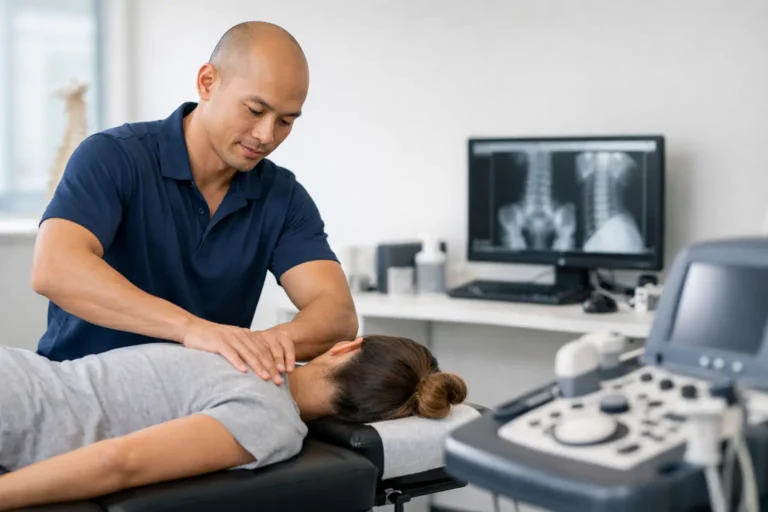
A good chiropractic adjustment should never feel like a one-size-fits-all production line. If you are asking, “Do you use manual adjustments or instruments?” you are really asking something more important: “Will this care be tailored to my body, comfort level, injury, and goals?” The answer should be yes.
At Greater Life Wellness Center, we use a doctor-led approach that may include manual chiropractic adjustments, instrument-assisted adjustments, or a combination of methods. The right choice depends on what your exam reveals, your health history, your mobility, your sensitivity, and what will help you move toward better function safely.
Do You Use Manual Adjustments or Instruments?
We use both. Neither method is automatically “better” for every person, every spine, or every stage of care.
A manual adjustment is performed by the doctor’s hands. It involves a precise, controlled contact to a joint that is not moving as well as it should. Some manual adjustments create an audible pop. That sound is simply gas releasing from the joint, much like opening a soda bottle. It is not a measure of whether the adjustment worked, and it is certainly not the goal.
Instrument-assisted adjustments use a small handheld device to deliver a quick, measured impulse to a specific area. The approach is typically gentler in force and does not require twisting or a large movement. For someone who is nervous about chiropractic, highly sensitive, recovering from an injury, or simply prefers a lighter approach, an instrument can be a very comfortable option.
The tool matters less than the clinical reasoning behind it. Your chiropractor should understand why a specific technique makes sense for you – not pull out the same tool for every person who walks through the door.
What Is the Difference in How They Feel?
Manual and instrument adjustments can feel quite different, but both are designed to address restricted motion and support healthier movement patterns.
Manual chiropractic adjustments
Manual care is often what people picture when they think of chiropractic. Depending on the area being adjusted, you may be positioned on your back, side, stomach, or seated. The doctor uses their hands to apply a quick, focused movement through the joint.
Many patients appreciate the hands-on feel of manual care. A manual adjustment can be especially useful when a doctor determines that a particular area needs more direct contact or when the patient responds well to that style of care. Active adults, recreational athletes, and people dealing with everyday stiffness often like the feeling of restored motion after a properly delivered adjustment.
Still, manual care is not a contest to see how much pressure you can tolerate. More force is not automatically better. A careful doctor adapts contact, position, and technique to the person on the table.
Instrument-assisted adjustments
Instrument adjustments are fast, specific, and generally low-force. You may feel a light tap or click at the treatment area. There is usually no twisting, and patients often remain in a comfortable position while the doctor works.
This approach may be a good fit for people with acute pain, muscle guarding, osteoporosis risk factors, arthritis, a recent auto accident, or apprehension about manual manipulation. It can also be a helpful option for children, older adults, and anyone who wants a gentle introduction to chiropractic care.
Gentle does not mean careless or weak. A well-applied instrument adjustment is intentional, targeted, and based on what your body needs that day.
Your Examination Should Guide the Technique
Before deciding on a care method, we begin with a consultation and comprehensive examination. If X-rays are clinically indicated, they can provide valuable information about spinal alignment, joint health, and areas that need extra caution. Then comes the report of findings – the conversation where you learn what we found, what it may mean for your function, and what care plan is recommended.
That process matters because back pain, neck pain, headaches, sciatica symptoms, and sports injuries do not all come from the same source. Two people can say, “My lower back hurts,” while having entirely different movement restrictions, postural patterns, nerve irritation concerns, or injury histories.
For example, someone seeking sciatica treatment in San Diego may need an approach that starts very gently because the area is inflamed and guarded. Another person may be ready for hands-on work, corrective exercise, and gradual return to running. Someone looking for an auto accident chiropractor in San Diego may need special consideration for whiplash-related symptoms, especially in the early stages after a collision.
Care should be built around findings, not guesswork.
Can You Switch Between Techniques?
Absolutely. Your body is not static, so your chiropractic care should not be either.
A patient may begin with instrument-assisted adjustments when pain is sharp or movement feels intimidating. As mobility improves and tissues calm down, manual adjustments may become appropriate. Another patient may prefer manual adjustments for most areas but receive instrument care around a particularly sensitive joint. Some visits may call for one method; others may call for both.
This flexibility is one reason personalized care is so valuable. The goal is not loyalty to a technique. The goal is helping you move, function, and live with greater confidence while reducing unnecessary reliance on pain medication.
Which Approach Is Better for Neck Pain, Sports Injuries, or Sciatica?
It depends on the diagnosis, your exam, and your response to care. That may sound less dramatic than a billboard promise, but it is the honest answer.
If you are looking for a neck pain specialist in San Diego, you deserve more than a quick crack and a goodbye. Neck pain can involve posture, repetitive work positions, old injuries, muscle tension, joint restriction, and other factors that require careful assessment. Some patients feel comfortable with manual neck adjustments, while others prefer instrument-assisted care or a different technique altogether.
For a sports chiropractor in San Diego, the conversation often includes more than the adjustment itself. An athlete may need movement screening, recovery guidance, targeted stretching, corrective exercises, and a plan for getting back to training without repeatedly aggravating the same area. The adjustment can support the plan, but it should not be the entire plan.
With sciatica-like symptoms, the priority is understanding what may be irritating the nerve pathway and identifying whether chiropractic care is appropriate. A doctor may recommend a low-force start, mobility work, changes to daily habits, and a gradual progression based on how you respond. If symptoms suggest a need for medical evaluation outside chiropractic, that should be addressed directly.
What Should You Expect at Your First Visit?
Your first visit is your opportunity to ask direct questions, including whether manual adjustments, instruments, or both may be used. You should never feel pressured to agree to a technique you do not understand.
Expect a conversation about your health history, current symptoms, lifestyle, work demands, activity goals, and prior injuries. Your exam may include posture assessment, range-of-motion testing, orthopedic and neurological checks, and X-rays when indicated. After reviewing the findings, your doctor should explain the recommended approach in plain English.
This is also the right time to mention concerns such as, “I do not want my neck twisted,” “I am afraid of popping sounds,” or “I had a bad experience somewhere else.” Those details are not inconvenient. They help shape better care.
For families in Point Loma, the Midway District, Ocean Beach, Liberty Station, Old Town, and nearby 92106, 92110, 92107, and 92109, finding a chiropractor should feel less like taking a gamble and more like starting a partnership. You deserve to be heard, examined thoroughly, and treated according to your needs.
The Best Technique Is One You Can Trust
Manual adjustments and instruments are both valuable options, but neither should be treated like a magic button. Lasting improvement often comes from combining appropriate chiropractic care with the everyday choices that support your body: better movement habits, corrective exercises, stretching, nutrition, stress management, and a plan you can realistically follow.
If pain, stiffness, or an injury is keeping you from sleeping well, working comfortably, exercising, or enjoying San Diego life, start with answers instead of assumptions. Reserve a no-obligation consultation and ask the questions that matter. The right care plan should make sense to you, feel appropriate for you, and give you a clear path back toward living your life with less pain and more freedom.
NEW PATIENT SPECIAL OFFER
If you’d like to increase your quality of life and revitalize your health… naturally, we have a valuable offer for you!
First visit for $59 which includes a consultation, examination, computerized muscle balance scan, and any necessary X-rays, to see if we can help you before you make any financial commitment.
There is NO OBLIGATION!

Dr. Henry Wong, DC
3689 Midway Drive, Suite G, San Diego, CA 92110
(619) 222-8885
Chiropractor San Diego CA
Monday, Wednesday & Thursday :
8:00 AM – 1:00 PM and 3:00 – 6:00 PM
Tuesday :
Appointment Only
Friday :
Appointment Only
Walk-ins Welcome During Regular Business Hours!
© 2026 GREATER LIFE WELLNESS CENTER, All Rights Reserved