
Sports Injuries Care in Point Loma: Move Better
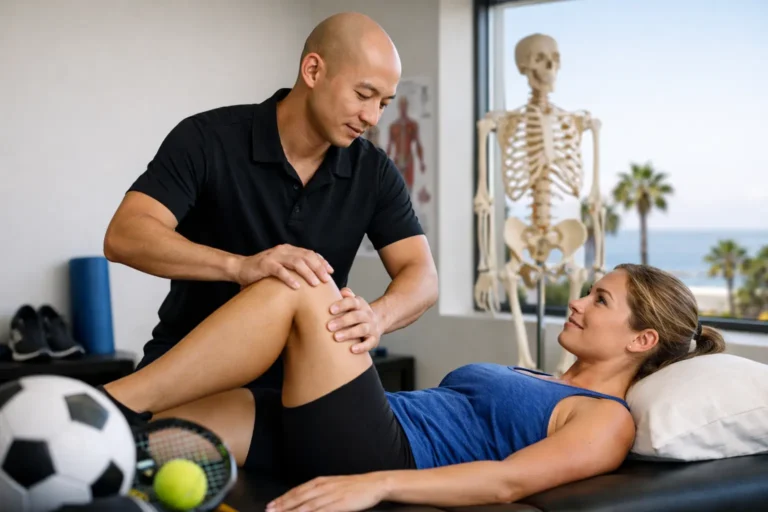
A sharp pull in your hamstring during a Saturday run is frustrating. A sore shoulder that makes it hard to sleep after pickleball is worse. Sports injuries do not stay neatly contained to the field, gym, trail, or court – they can change how you work, drive, exercise, and show up for your family.
For active adults in Point Loma, Ocean Beach, Liberty Station, and nearby San Diego neighborhoods, the goal is rarely to simply stop hurting for a day. The real goal is to understand what happened, restore confident movement, and get back to the activities that make life feel like life. That takes more than guessing, stretching randomly, or trying to “tough it out” until your body sends a louder memo.
Why Sports Injuries Need More Than a Quick Fix
Many sports injuries begin with an obvious event: a hard fall, an awkward landing, a collision, or a sudden twist. Others build quietly. A runner starts noticing knee tightness after adding mileage. A desk-bound professional joins a weekend soccer league and develops low-back pain. A recreational lifter compensates for shoulder stiffness until one ordinary rep becomes the rep that hurts.
Pain is valuable information, but it does not always identify the full source of the problem. The area that hurts may be carrying extra load because another joint is restricted, muscles are not coordinating well, posture has changed, or an old injury never fully regained strength and control. This is why repeated flare-ups can feel so discouraging. You rest, symptoms calm down, you return to activity, and there it is again.
A thoughtful recovery plan looks at the whole movement picture. It considers the injured area, the spine and nervous system, joint motion, training habits, recovery, and the daily demands that may be keeping the problem alive. The point is not to blame every ache on one thing. It is to avoid treating the body like a collection of disconnected parts.
Common Sports Injuries We See in Active Adults
Recreational athletes get hurt in plenty of creative ways. Most injuries, however, fall into familiar patterns: sprains, strains, tendon irritation, overuse pain, joint stiffness, and impact-related injuries.
Lower-body complaints often include ankle sprains, knee pain, hip tightness, plantar fasciitis-type heel pain, hamstring strains, and sciatica-like symptoms. Back pain can develop after golf, cycling, lifting, surfing, or a long day sitting after training. In the upper body, shoulder pain, neck tension, elbow irritation, and wrist discomfort are common in swimmers, tennis and pickleball players, CrossFit enthusiasts, climbers, and people who work at a computer between workouts.
The label matters less than a proper evaluation. “Just a pulled muscle” is not a diagnosis you should hand yourself after a quick search and two days with an ice pack. A strain may be straightforward, but persistent pain can also involve joint irritation, nerve sensitivity, poor movement mechanics, or a more serious injury that deserves medical attention.
When to Get Checked Right Away
Some symptoms should not wait for a chiropractic appointment or a return-to-play experiment. Seek urgent medical evaluation for severe pain after trauma, visible deformity, inability to bear weight, significant swelling, a suspected fracture, loss of bladder or bowel control, saddle numbness, progressive weakness, chest pain, severe headache after a head injury, confusion, or loss of consciousness.
If symptoms are not urgent but are lingering, worsening, recurring, or changing how you walk, sleep, or use an arm, an exam is still a smart next step. Waiting until a small problem becomes a full training shutdown is not a medal-worthy strategy.
Can a Chiropractor Help With Sports Injuries?
Chiropractic care may help with many musculoskeletal sports injuries, especially when pain is connected to restricted joint movement, spinal dysfunction, muscle tension, altered mechanics, or nerve irritation. Care is not a substitute for emergency treatment, surgery when surgery is necessary, or appropriate medical management of fractures and serious tears. It can, however, be a conservative part of a coordinated recovery plan for the right patient.
At Greater Life Wellness Center, care begins by listening to how the injury happened, what movements trigger symptoms, what you have already tried, and what you need to return to. A comprehensive examination helps determine whether chiropractic care is appropriate. X-rays may be recommended when clinically indicated, not as a routine photo shoot for your skeleton. Afterward, a report of findings explains what was discovered and what an individualized care plan may involve.
Chiropractic adjustments are intended to improve spinal and joint motion and support nervous system function. Depending on the condition, care may also include corrective exercises, targeted stretching, guidance on activity modification, and conversations about recovery habits, nutrition, stress, and sleep. These pieces matter because an adjustment without a plan for the way you move, train, and recover can be like fixing a flat tire while driving over the same nail.
For some patients, the best recommendation is co-management with a primary care provider, orthopedist, physical therapist, or other specialist. That is not a failure of chiropractic care. It is good clinical judgment.
What to Expect From Sports Injury Chiropractic Care
Your first visit should feel more like an investigation than a conveyor belt. Expect a consultation about your health history, sport or activity, prior injuries, medications, training schedule, and goals. The doctor will evaluate posture, range of motion, strength-related findings, orthopedic and neurological indicators, and areas of tenderness or restriction as appropriate.
If imaging is warranted, it can provide additional information about alignment, structural changes, or whether another referral is needed. Your report of findings should translate the exam into plain English: what may be contributing to your symptoms, what care can reasonably address, what your options are, and what progress should look like.
Early care may focus on reducing irritation and restoring comfortable movement. As symptoms improve, the emphasis often shifts toward stability, mobility, and a gradual return to the demands of your sport. This matters because feeling better and being ready for full-speed cutting, lifting, paddling, or sprinting are not always the same thing.
How Many Chiropractic Visits Will I Need?
The honest answer is: it depends. A mild, recent strain may improve over a short course of care. A long-standing problem involving repeated flare-ups, poor movement patterns, previous injuries, or substantial training demands may require a longer plan. Your age, overall health, sleep, stress, work posture, consistency with exercises, and the severity of the injury all affect the timeline.
Be wary of anyone promising a precise number of visits before examining you. A responsible care plan has a starting recommendation, measurable goals, and regular reassessment. You should understand why care is recommended and whether your function is improving – for example, walking without limping, sleeping comfortably, returning to squats, or completing a run without symptoms escalating afterward.
The Return-to-Activity Mistake That Keeps People Hurt
The most common error is treating pain relief as a green light for an immediate return to the exact workload that caused the problem. If you could not run three miles without pain last week, attempting a hilly six-mile run because you feel 70% better is a bold choice. Your hamstring may not admire the confidence.
A better approach is progressive loading. Start with the movements you can perform with acceptable symptoms and good form, then increase duration, resistance, speed, range, or complexity gradually. The right pace varies. A golfer may return through putting and short swings before full drives. A runner may alternate walking and easy jogging before adding speed work. A lifter may rebuild technique and tolerance with lighter loads before chasing previous numbers.
Pay attention to how your body responds later that day and the next morning. Mild, short-lived soreness can be normal when rebuilding capacity. Sharp pain, swelling, altered movement, numbness, or worsening symptoms are signals to scale back and get reassessed.
A More Sustainable Way to Stay in the Game
The best sports injury plan does not only ask, “How do we calm this pain?” It also asks, “Why did this tissue have to absorb so much stress, and what can help the body handle activity better next time?” That question leads to a more useful conversation about mobility, strength, spinal health, recovery, workload, footwear or equipment, and the gap between weekend ambitions and weekday conditioning.
If pain or stiffness is keeping you from the activities you enjoy, start with answers rather than assumptions. A no-obligation consultation and evaluation can help determine whether a comprehensive chiropractic plan is an appropriate next step. You deserve a plan built around getting you moving with more confidence – not another bottle of pain relievers and a hope-for-the-best return to the game.
NEW PATIENT SPECIAL OFFER
If you’d like to increase your quality of life and revitalize your health… naturally, we have a valuable offer for you!
First visit for $59 which includes a consultation, examination, computerized muscle balance scan, and any necessary X-rays, to see if we can help you before you make any financial commitment.
There is NO OBLIGATION!

Dr. Henry Wong, DC
3689 Midway Drive, Suite G, San Diego, CA 92110
(619) 222-8885
Chiropractor San Diego CA
Monday, Wednesday & Thursday :
8:00 AM – 1:00 PM and 3:00 – 6:00 PM
Tuesday :
Appointment Only
Friday :
Appointment Only
Walk-ins Welcome During Regular Business Hours!
© 2026 GREATER LIFE WELLNESS CENTER, All Rights Reserved