
Why Your Back Hurts After Sitting: Causes & Solutions
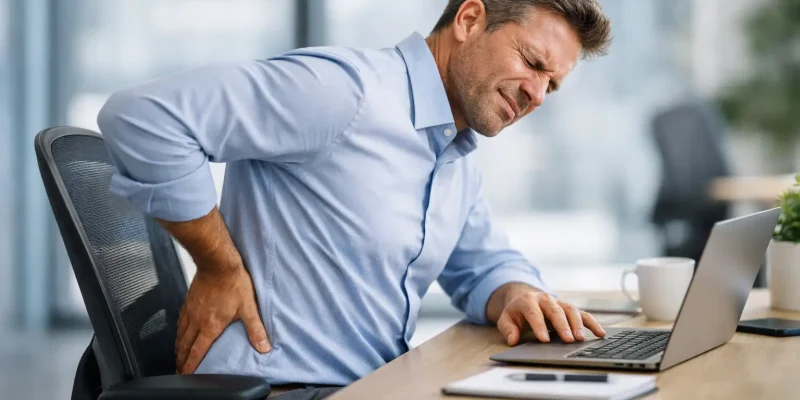
You stand up from your desk, the couch, or the driver’s seat – and your back feels stiff, tight, or sharply sore for those first few steps. If you’ve been asking, “why does my back hurt after sitting,” you are not imagining it, and you are not alone. This pattern usually points to a mechanical issue in the spine, muscles, discs, or posture habits that gets worse when your body stays in one position too long.
For many adults, sitting feels like rest. For the spine, it often is not. Long periods of sitting can increase pressure on the lower back, shorten certain muscles, weaken others, and expose underlying alignment problems that may not bother you as much when you are moving. That is why some people feel fine during the day but pay for it the moment they stand up.
Why does my back hurt after sitting for a while?
The short answer is that your body is built for movement, not stillness. When you sit for extended periods, especially with a rounded lower back or forward head posture, the joints in the spine can become compressed and irritated. The muscles around them may tighten as they try to stabilize you, while the discs in the lower back handle more load than they should.
The longer you stay there, the more those tissues stiffen. Then, when you stand, everything has to transition quickly from a compressed, inactive position to an upright, weight-bearing one. That first movement can feel achy, pinching, or even alarming.
This does not always mean there is a serious injury. But it does mean your body is giving you useful information. Pain after sitting is often a sign that something about your posture, spinal mechanics, work setup, or movement habits needs attention.
The most common causes of back pain after sitting
In many cases, the pain starts with posture, but posture is rarely the whole story. A slouched position tends to tuck the pelvis under, flatten the natural lumbar curve, and place more stress on the lower spinal discs and ligaments. If your workday includes hours at a laptop, in a car, or on a soft couch, that stress adds up fast.
Muscle imbalance is another common piece of the puzzle. Tight hip flexors and hamstrings can pull on the pelvis and change how the low back moves. At the same time, weak core and glute muscles may leave the lower back doing more than its share of the work. When that happens, sitting becomes less of a neutral position and more of a slow strain.
Joint restriction can also be involved. If segments of the spine are not moving well, surrounding tissues often compensate. You may notice stiffness centered in one spot, pain when straightening up, or a feeling that your back needs to “crack” before it loosens.
Sometimes the issue goes deeper than muscle tension. A bulging or irritated disc can become more symptomatic with sitting because seated posture often increases disc pressure. If your pain travels into the hip or leg, or includes numbness, tingling, or burning, that is an important clue that a nerve may be involved.
Why sitting can aggravate the lower back more than standing
People are often surprised to hear that sitting can place more strain on the lower back than standing. That is especially true when sitting is relaxed in the wrong way – slumped over, leaning forward, or perched at the edge of a chair.
Standing allows the body to make constant small adjustments. Sitting reduces that natural movement. Blood flow drops, muscles become less active, and pressure stays concentrated in the same areas. Even good posture can become bad posture if you hold it for too long.
This is why the answer is not simply “sit up straight” and hope for the best. Alignment matters, but so does frequency of movement, chair support, desk height, screen position, stress level, and what condition your spine was in before you sat down.
When your back pain after sitting may point to a bigger issue
There are times when back pain after sitting is more than everyday stiffness. If the pain is persistent, keeps returning, or is starting to interfere with work, workouts, sleep, or driving, it is worth getting evaluated. Recurrent symptoms often mean the body is compensating for an underlying problem rather than resolving it.
A proper evaluation can help identify whether the source is muscular, joint-based, disc-related, posture-driven, or connected to nerve irritation. This matters because the right plan for one cause may not help another. Stretching, for example, can be useful for tight muscles but less effective if spinal alignment and joint mechanics are the main issue.
Red flags deserve prompt medical attention. Those include loss of bladder or bowel control, significant weakness in the legs, saddle numbness, fever, unexplained weight loss, or pain after a major fall or accident. Most back pain is mechanical, but serious symptoms should never be ignored.
What helps when your back hurts after sitting
If your pain is mild and recent, a few simple changes can make a real difference. The first is breaking up sitting time. Standing up every 30 to 45 minutes, even for a minute or two, can reduce stiffness and help the joints reset. A short walk, gentle back extension, or a few hip-opening movements often helps more than trying to sit perfectly for hours.
Your chair and workstation matter too. Ideally, your feet should rest flat, your knees should be near hip level, and your screen should not force your head forward. If you work from a laptop, using a separate keyboard and raising the screen can reduce strain on both the neck and lower back.
Movement outside the workday is just as important. Walking, corrective exercises, and targeted stretching can improve how the spine and pelvis handle load. But the key is being specific. If you stretch what is already overstretched or strengthen around an untreated alignment problem, progress can be slow.
That is where a root-cause approach becomes valuable. Instead of masking symptoms with medication and hoping the problem settles down, it makes sense to find out why the pain keeps showing up after sitting in the first place.
Why does my back hurt after sitting if I exercise regularly?
Being active absolutely helps, but exercise does not automatically fix spinal dysfunction. Plenty of runners, gym-goers, golfers, and recreational athletes still deal with back pain after sitting because the issue is not just fitness – it is mechanics.
You can be strong and still have restricted joints, pelvic imbalance, poor desk posture, repetitive stress from driving, or a disc that becomes irritated in seated positions. In fact, active adults sometimes notice sitting pain more because they expect their body to feel better than it does.
The good news is that exercise and treatment often work well together. When spinal movement improves and the right muscles are doing the right jobs, your workouts tend to feel better, recovery improves, and sitting becomes less aggravating.
How chiropractic care can help
When back pain keeps returning after sitting, chiropractic care can help by addressing the structure and function of the spine rather than covering up the pain signal. If spinal joints are not moving properly, or if posture and alignment are putting abnormal stress on the lower back, adjustments may help restore motion and reduce irritation.
At Greater Life Wellness Center, the focus is not on a quick crack and send-you-home approach. Care starts with a consultation, a comprehensive exam, and imaging when indicated, followed by a report of findings that explains what is happening and what can be done about it. That kind of clarity matters when you are tired of temporary fixes.
For many patients, the best results come from combining hands-on care with corrective exercises, stretching, and simple changes to daily habits. That may include how you sit, how often you move, how your workstation is set up, and how much stress your body is carrying overall. Real recovery is usually a process, not a single appointment.
What is the root cause of my back pain after sitting?
Quick relief matters. If your back is flaring up every time you stand, you want that gone as soon as possible. But the better long-term question is, “What keeps causing this pattern?”
That shift changes everything. It moves you away from chasing symptoms and toward understanding your body. It also gives you a better chance of staying active, staying off pain medication, and getting back to work, workouts, and daily life with more confidence.
If your back hurts after sitting once in a while, your body may just need more movement and better support. If it happens often, your spine may be asking for a closer look. Either way, pain is not something you have to simply tolerate while hoping it fades on its own.
NEW PATIENT SPECIAL OFFER
If you’d like to increase your quality of life and revitalize your health… naturally, we have a valuable offer for you!
First visit for $59 which includes a consultation, examination, computerized muscle balance scan, and any necessary X-rays, to see if we can help you before you make any financial commitment.
There is NO OBLIGATION!

Dr. Henry Wong, DC
3689 Midway Drive, Suite G, San Diego, CA 92110
(619) 222-8885
Chiropractor San Diego CA
Monday, Wednesday & Thursday :
8:00 AM – 1:00 PM and 3:00 – 6:00 PM
Tuesday :
Appointment Only
Friday :
Appointment Only
Walk-ins Welcome During Regular Business Hours!
© 2026 GREATER LIFE WELLNESS CENTER, All Rights Reserved