
Scoliosis and Chiropractic Care in Point Loma
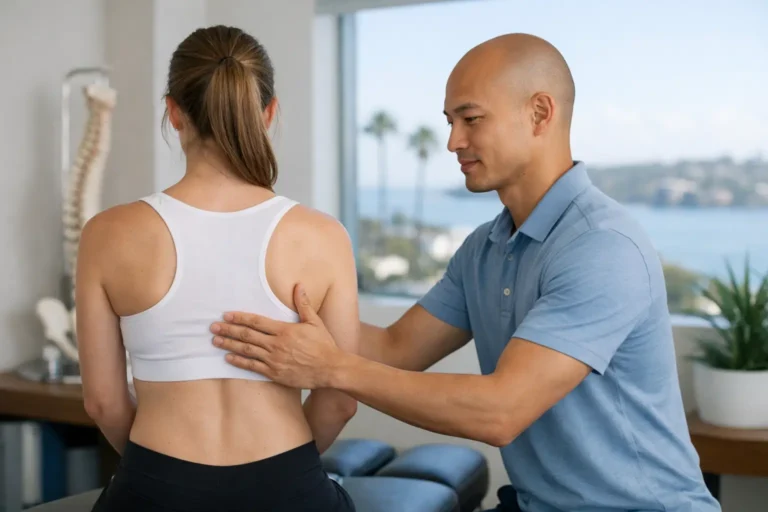
A scoliosis diagnosis can make everyday aches feel much bigger. You may wonder whether the curve is getting worse, whether exercise is safe, or whether a stiff back is simply something you have to live with. Scoliosis and chiropractic care can be part of a thoughtful, conservative plan for improving comfort, movement, and confidence – without treating every sore day as a medication emergency.
At Greater Life Wellness Center, care begins by understanding the person behind the X-ray. A spinal curve is not a one-size-fits-all problem, and neither is the plan for helping you move better.
What scoliosis means for your body
Scoliosis is a sideways curvature of the spine that is typically measured on an X-ray. It can occur in children and teens during growth, but adults can also develop or notice scoliosis later in life. In adults, a longstanding curve may become more symptomatic as discs, joints, muscles, and posture change over time.
The curve itself is only one piece of the picture. Two people with similar X-rays can have very different experiences. One may run, lift, and work without much trouble. Another may deal with one-sided muscle tightness, fatigue after standing, headaches, uneven shoulder or hip height, back pain, or discomfort that travels into the buttock or leg.
That is why chasing a perfect-looking spine is not the goal. The practical goal is to understand how your spinal structure, nervous system, movement habits, strength, and daily demands are working together. A desk-bound professional in the Midway District has different stressors than a recreational athlete in Ocean Beach or Pacific Beach. Your care should reflect that.
Can chiropractic help with scoliosis?
Chiropractic care cannot promise to erase every spinal curve, and anyone who promises a magic correction deserves a raised eyebrow. The degree, cause, flexibility, and progression risk of a curve matter. For some patients, particularly children with progressing curves, bracing and medical monitoring may be necessary. For more complex cases, collaboration with a pediatrician, orthopedist, or spine specialist is the right move.
Chiropractic care may still help many people with scoliosis by addressing the problems surrounding the curve: restricted joint motion, irritated muscles, postural strain, poor movement patterns, and nervous system stress. Gentle, individualized adjustments can be used to improve spinal and joint mobility. When paired with corrective exercise, targeted stretching, and lifestyle guidance, care may help reduce pain, improve function, and make daily activities feel less like a negotiation with your back.
The outcome depends on the individual. A flexible mild curve in a growing child, a painful adult degenerative curve, and a stable curve with a recent lifting injury each call for a different approach. The best plan is honest about what chiropractic can support and clear about when another provider needs to be involved.
Care starts with more than a quick adjustment
A thoughtful scoliosis evaluation should not begin with, “Lie down and let’s crack your back.” At your first appointment, expect a conversation about your symptoms, health history, injuries, activities, work setup, and goals. The doctor will perform a comprehensive examination that may include posture assessment, range-of-motion testing, neurological checks, and orthopedic testing.
X-rays may be recommended when clinically indicated. Imaging can help identify the curve, measure its severity, assess alignment, and rule out concerns that would change the care plan. After the exam, a report of findings translates what was discovered into plain English: what may be causing your symptoms, what care may help, what progress markers matter, and whether referral or co-management is appropriate.
That process is especially valuable for parents. A child’s uneven shoulder, rib prominence when bending forward, or repeated complaints of back discomfort deserves more than a guess. Early assessment can help families understand whether monitoring, conservative care, or specialty referral makes sense.
A scoliosis care plan should support daily life
Adjustments are often one part of care, not the whole story. If the muscles on one side of your body are constantly overworking, the relief from a single visit may not hold without changing the patterns that created the overload. That is where an active plan matters.
Your plan may include chiropractic adjustments for restricted areas, mobility work for stiff hips or the thoracic spine, and strengthening that improves control without aggravating symptoms. Targeted stretching can help with the tight, guarded feeling that often develops around a curve. Nutritional guidance, sleep strategies, and stress-relief techniques may also support recovery, especially when pain has made your nervous system feel like it is permanently set to high alert.
Consistency matters, but more visits are not automatically better. The frequency of care should be based on your exam findings, symptoms, response to treatment, and goals. Some people begin with closer care during an active flare-up, then transition to exercises and periodic wellness visits as they build resilience.
Staying active with scoliosis
Most people with scoliosis benefit from continuing to move. Walking, strength training, swimming, cycling, and sport can often remain part of life with the right modifications. The key is listening to symptoms and building capacity gradually instead of going from zero to a heroic Saturday workout.
If running, golf, weightlifting, or pickleball brings on one-sided pain, your doctor can help identify whether movement restriction, poor load tolerance, or an old injury is contributing. This is one reason a Sports Chiropractor San Diego patients can trust should look beyond the location of pain. Your low back may be complaining, but the issue may involve hip mobility, core control, footwear, training volume, or a work posture that has been quietly stealing your recovery.
When scoliosis needs medical attention first
Conservative care is valuable, but safety comes first. Seek prompt medical evaluation for new bowel or bladder changes, numbness in the groin area, significant or worsening weakness, fever with back pain, unexplained weight loss, severe pain after a fall or accident, or pain that repeatedly wakes you at night. These symptoms may signal something more serious than a mechanical spinal problem.
Children and teens with a suspected curve should also be assessed promptly, particularly during growth spurts. A rapidly changing posture or curve needs proper measurement and medical guidance. Chiropractic care can fit into a team-based plan, but it should never delay necessary specialty evaluation.
Questions patients often ask
Can a chiropractor help sciatica?
A chiropractor may help sciatica when leg pain is related to joint restriction, muscle tension, disc irritation, or movement problems in the low back and pelvis. A careful exam is essential because not all leg pain is the same. For Sciatica Treatment San Diego residents can feel good about, the plan should identify the source of symptoms, check for neurological changes, and use appropriate conservative care or referral.
How many chiropractic visits are needed for neck pain?
There is no honest universal number. Recent neck pain from sleep position or desk strain may improve quickly, while chronic pain after years of posture stress or an auto accident may take longer. A Neck Pain Specialist San Diego patients choose should reassess progress rather than sell a cookie-cutter visit package. Your response to care, home habits, imaging when indicated, and ability to follow your exercise plan all affect the timeline.
Can chiropractic care help vertigo?
Some dizziness can be associated with neck dysfunction, muscle tension, or altered joint input, and chiropractic care may help when those factors are involved. But vertigo also has inner-ear, neurological, cardiovascular, and medication-related causes. Sudden or severe dizziness, new headaches, speech changes, facial drooping, vision changes, fainting, or weakness requires urgent medical attention. The right answer is not “adjust everything.” It is finding out what is actually going on.
Take the next step with clarity
If scoliosis is affecting how you work, train, sleep, or keep up with your family, you deserve a plan built around your actual body and your actual goals. Patients from Point Loma, Liberty Station, Old Town, and nearby 92106, 92110, and 92107 can reserve a no-obligation consultation and evaluation to talk through their concerns before committing to care. A well-informed next step can replace uncertainty with a practical path toward moving with more comfort and living your life with less fear of the next flare-up.
NEW PATIENT SPECIAL OFFER
If you’d like to increase your quality of life and revitalize your health… naturally, we have a valuable offer for you!
First visit for $59 which includes a consultation, examination, computerized muscle balance scan, and any necessary X-rays, to see if we can help you before you make any financial commitment.
There is NO OBLIGATION!

Dr. Henry Wong, DC
3689 Midway Drive, Suite G, San Diego, CA 92110
(619) 222-8885
Chiropractor San Diego CA
Monday, Wednesday & Thursday :
8:00 AM – 1:00 PM and 3:00 – 6:00 PM
Tuesday :
Appointment Only
Friday :
Appointment Only
Walk-ins Welcome During Regular Business Hours!
© 2026 GREATER LIFE WELLNESS CENTER, All Rights Reserved