
Bulged or Herniated Disc Care in Point Loma
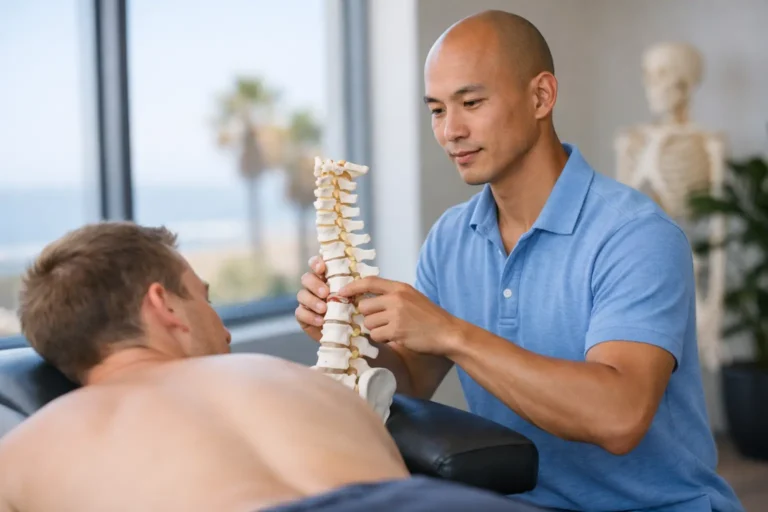
That sharp jolt when you get out of the car, the ache that runs from your low back into your leg, or the numbness that makes a normal workday feel endless can be more than ordinary soreness. A bulged/herniated disc can interfere with sleep, training, work, and the simple ability to move without thinking about every step.
The good news is that many disc-related symptoms improve with a thoughtful, conservative plan. The key is not guessing, stretching randomly, or trying to power through because your weekend softball game is coming up. It is understanding what is irritating the area, what movements are making it worse, and what your body needs to recover safely.
At Greater Life Wellness Center, that starts with listening. Your symptoms matter, but so does the bigger picture: your spinal alignment, movement patterns, work demands, exercise habits, old injuries, stress level, and nervous system function.
What Is a Bulged or Herniated Disc?
Between the bones of your spine are discs that act as cushions and help your back move. Each disc has a tougher outer layer and a softer, gel-like center. A bulging disc occurs when the disc extends beyond its usual boundary. A herniated disc occurs when part of the inner material pushes through a tear or weak area in the outer layer.
Those terms are related, but they are not interchangeable. A bulge may create no symptoms at all. A herniation may cause significant pain, tingling, numbness, or weakness if it irritates a nearby nerve. The size of a finding on an image does not always match the amount of pain someone feels, which is one reason a real examination matters more than trying to diagnose yourself from a search result at 1:00 a.m.
Disc symptoms often show up in the low back, but they can also occur in the neck. In the lower back, irritation of the sciatic nerve can send pain down the buttock, leg, calf, or foot. That is why a person searching for sciatica treatment in San Diego may actually need an assessment of the low back, hips, posture, and nerve function rather than a quick fix for the leg alone.
Why Does Disc Pain Happen?
A disc problem can develop after a single event, such as lifting something awkwardly, a fall, or a car accident. It can also build gradually through repetitive bending, prolonged sitting, poor lifting mechanics, deconditioning, or years of accumulated stress on the spine.
Active people are not immune. Runners, golfers, gym regulars, surfers, and recreational athletes can develop symptoms when training volume rises faster than their body can adapt. A sports chiropractor in San Diego should look beyond the painful spot and consider how hip mobility, core control, foot mechanics, recovery, and technique may be affecting the spine.
Age-related changes can contribute, but disc pain is not simply a sentence handed down by your birthday. Many people improve their function and reduce symptoms when they address the mechanical and lifestyle factors that keep aggravating the area.
Can a Chiropractor Help a Bulged or Herniated Disc?
Chiropractic care may help some people with disc-related back or neck pain by improving spinal motion, reducing mechanical stress, supporting nervous system function, and helping the body move more efficiently. Care is not a one-size-fits-all series of adjustments. The right approach depends on your symptoms, exam findings, medical history, imaging when indicated, and whether there are signs that require referral or co-management.
For some patients, gentle, specific chiropractic adjustments can be part of a conservative care plan. For others, the first phase may focus more heavily on positioning advice, activity modification, targeted exercises, stretching, and reducing irritation before more direct spinal work is appropriate. The goal is not to force a painful movement or pretend that every back problem responds the same way.
A chiropractor should never promise to put a disc back in place. That is not how disc healing works. What thoughtful chiropractic care can do is evaluate the spine and nervous system, identify contributing movement issues, and create a plan aimed at helping you regain comfort, strength, and confidence without defaulting immediately to pain medication.
What to Expect at Your First Visit
If you are dealing with a suspected bulged or herniated disc, your first visit should feel more like a proper investigation than a five-minute assembly line appointment. At Greater Life Wellness Center, the process begins with a consultation so you can explain where the pain started, what it feels like, what aggravates it, and what you have already tried.
Next comes a comprehensive examination. This may include posture analysis, range-of-motion testing, orthopedic and neurological checks, and an evaluation of how your body moves. X-rays may be recommended when clinically appropriate to better understand spinal structure and alignment. Not everyone needs imaging, and an X-ray does not show every type of disc issue. Advanced imaging may be considered through the appropriate medical channels when symptoms and exam findings warrant it.
After the assessment, you should receive a clear report of findings. This is where the confusing medical language gets translated into plain English: what may be contributing to your symptoms, what care may involve, what results are realistic, and what you can do between visits to support recovery.
How Many Chiropractic Visits Will I Need?
The honest answer is: it depends. A recent flare-up in someone who is otherwise healthy may respond differently than long-standing pain with leg numbness, prior surgery, repeated injuries, or a physically demanding job. Some people notice changes early, while others need more time because the problem has been building for years.
Your care plan should be based on objective findings and your progress, not a generic number pulled from a brochure. Early care may involve more frequent visits to calm irritation and restore movement. As you improve, the focus often shifts toward corrective exercises, strengthening, mobility, and strategies that help you stay active without constantly re-triggering symptoms.
For patients in Point Loma, the Midway District, Ocean Beach, Liberty Station, Old Town, Mission Hills, and Pacific Beach, convenience matters too. When pain makes driving, sitting, or working difficult, having a clear plan close to home can make it easier to stay consistent.
What You Can Do While You Recover
Resting completely for long periods is usually not the answer, but neither is trying to prove your toughness by deadlifting through nerve pain. Stay gently active within your tolerance, and avoid movements that consistently send pain farther down an arm or leg.
Pay attention to your sitting setup, especially if you work at a desk or spend time commuting across San Diego. Change positions regularly. Use good lifting mechanics. Sleep in a position that does not aggravate symptoms. If your clinician recommends specific exercises, do them consistently rather than collecting a dozen random routines online and hoping one has magic powers.
Nutrition, hydration, sleep, stress management, and healthy body composition can also influence how well your body handles inflammation and recovery. These are not replacement treatments for a significant injury, but they are meaningful parts of a whole-body plan.
When Disc Symptoms Need Urgent Medical Attention
Most back pain does not signal an emergency, but certain symptoms should never be ignored. Seek urgent medical evaluation for new loss of bowel or bladder control, numbness in the groin or saddle area, rapidly worsening weakness, severe pain after major trauma, fever with severe back pain, or unexplained weight loss. These signs may point to a condition that needs immediate medical care rather than routine conservative treatment.
If you have persistent leg weakness, progressive numbness, or pain that is not improving, a thorough evaluation is also important. Good patient advocacy means knowing when chiropractic care may be appropriate and when another level of medical assessment is needed.
A bulged or herniated disc does not have to decide how much of your life you get to enjoy. If back or neck pain is keeping you from work, workouts, family time, or a decent night of sleep, reserve a no-obligation consultation avaluation and get answers based on your body, not a generic internet checklist.
NEW PATIENT SPECIAL OFFER
If you’d like to increase your quality of life and revitalize your health… naturally, we have a valuable offer for you!
First visit for $59 which includes a consultation, examination, computerized muscle balance scan, and any necessary X-rays, to see if we can help you before you make any financial commitment.
There is NO OBLIGATION!

Dr. Henry Wong, DC
3689 Midway Drive, Suite G, San Diego, CA 92110
(619) 222-8885
Chiropractor San Diego CA
Monday, Wednesday & Thursday :
8:00 AM – 1:00 PM and 3:00 – 6:00 PM
Tuesday :
Appointment Only
Friday :
Appointment Only
Walk-ins Welcome During Regular Business Hours!
© 2026 GREATER LIFE WELLNESS CENTER, All Rights Reserved